Yin Yoga is a peaceful practice where you take time for quiet reflection and identity. If you want to deepen your routine, you might consider trying 26 Yin Yoga Poses. On the other hand, Yang Yoga focuses on the use of muscles during movement and sweat; Yin Yoga works on the internal system of the body through the use of long stays in passive postures.
Several people ask this question about the 26 Yin Yoga poses (also called the “fundamental Yin Yoga Poses”). Although there is no universal standard for Yin Yoga, most teaching methods and Teacher Training programs use the same 26 fundamental Yin Yoga poses as their basis for teaching.
The following pages detail the basic 26 of the Yin Yoga postures, stating each pose’s purpose, the significance of this purpose for a beginner, an experienced practitioner, or an instructor, and how to sequence these postures.
What Makes 26 Yin Yoga Poses Different?
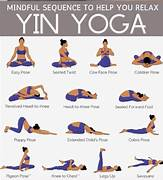
However, before we explore the poses, it is necessary to be aware of the principles that guide Yin Yoga:
- The pose is held for 2-5 minutes or longer
- The muscles are relaxed; the work is done by gravity
- Sensation is encouraged, but pain is not
- Stillness is just as important as the stretch
- The practice activates fascia and meridian pathways (from Traditional Chinese Medicine)
- Now, let’s proceed to the poses.
The 26 Yin Yoga Poses
1. Child’s Pose (Balasana)
A very earthy pose that gently stretches the spine, hips, and ankles. Frequently used as a resting pose between more extreme shapes.
2. Caterpillar (Seated Forward Fold)
Stretches the spine, hamstrings, and fascia along the back body. Encourages introspection and release.
3. Butterfly
A seated hip opener that targets the inner thighs and lower back. Props can be used to support the knees for longer holds.
4. Half Butterfly
A single-sided variation of Butterfly that allows for deeper access to one hip at a time.
5. Dragon (Low Lunge)
One of the most intense hip flexor openers in Yin Yoga. Has many variations (twisted, winged, or straight-on).
6. Square (Fire Log)
A very strong external hip rotation pose. Sensations can be extreme; blocks are often necessary.
7. Shoelace
Stretches the outer hips and IT band. Frequently followed by a forward fold to enhance sensation.
8. Sleeping Swan (Yin Pigeon)
Stretches the glutes, hip rotators, and sacral region. Emotional release is common in this pose.
9. Deer Pose
Combines internal and external hip rotation, creating a balanced stretch for both hips.
10. Frog
Excellent groin and inner thigh opener. Must be done slowly and carefully.
11. Wide-Legged Forward Fold (Dragonfly)
Stretches adductors and spine. Often done with side bends or twists.
12. Bananasana
Reclined side stretch that opens the lateral body, ribs, and IT band.
13. Reclined Twist
Gently presses and stretches the spine, aiding digestion and spinal well-being.
14. Snail
Round spinal pose that presses the front body and extends the back body.
15. Seal
Passive backbend that stimulates the lower lumbar region and organs. Less intense than Cobra Pose.
16. Sphinx
Mild backbend suitable for beginners. Encourages gentle spinal extension.
17. Saddle
Deep quad and hip flexor stretch with secondary effects on the lower spine. Props are essential in this pose.
18. Supported Bridge
Stretches chest and hip flexors while soothing the nervous system.
19. Dangling (Standing Forward Fold)
Gravity-assisted hamstring and spinal stretch. Excellent for relieving spinal tension.
20. Toe Squat
Stretches feet, ankles, and plantar fascia—often painful but very beneficial.
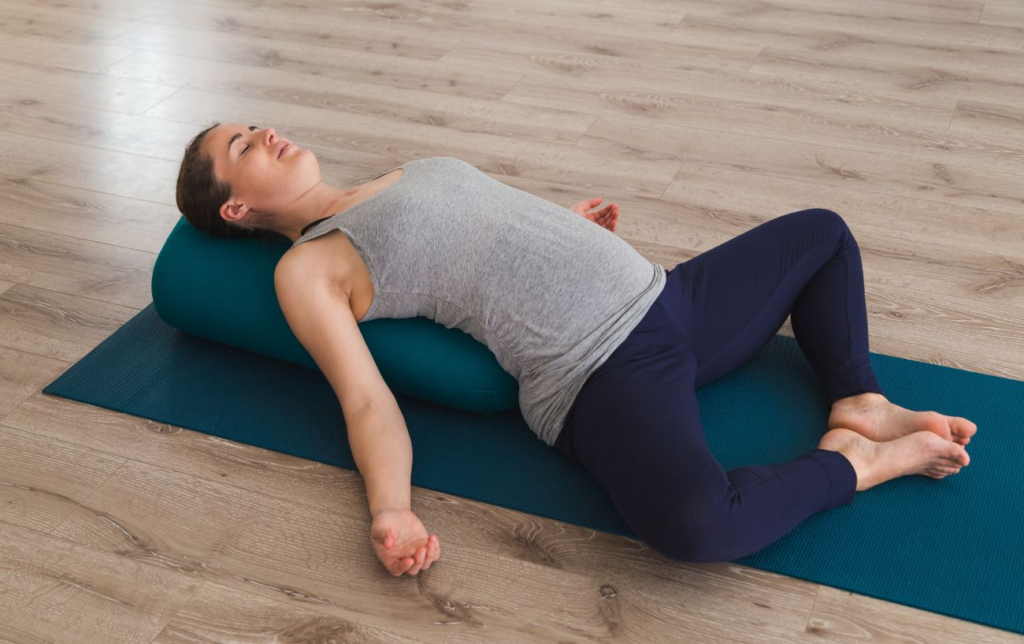
21. Reclined Butterfly
Restorative heart opener that soothes the nervous system and induces relaxation.
22. Happy Baby
Gently opens the hips and lower back while retaining a playful attitude.
23. Anahatasana (Melting Heart)
Heart-opening pose that stretches the shoulders, chest, and upper back.
24. Thread the Needle
Focuses on the shoulders and upper back, counteracting prolonged sitting or computer use.
25. Legs Up the Wall
Gentle inversion that promotes circulation, relaxation, and lymphatic drainage.
26. Savasana
Final resting pose. Crucial for integration, relaxation, and nervous system regulation.
Why These 26 Poses Matter
- These poses encompass all the major joint systems and meridian paths that are addressed in Yin Yoga, including:
- Hips and pelvis
- Spine (flexion, extension, rotation, and side bending)
- Shoulders and upper back
- Knees, ankles, and feet
- These poses work well together to form a complete practice that can be modified to suit all levels.
How Long Should You Hold Yin Poses?
The holding time for most Yin postures is 2 to 5 minutes, although experienced practitioners can hold postures for as long as 10 minutes. The aim is not to feel intense sensations but to maintain a constant flow of sensation.
The rule of thumb:
- If you experience pain, numbness, or strain, you’re going too far.
- Props in Yin Yoga
- Props are not optional in Yin Yoga; they are mandatory.
- Some common props used in Yin Yoga are:
- Blocks (to support knees, hips, and hands)
- Bolsters (to support the spine)
- Blankets (for warmth and joint support)
- Pillows (for comfort and longer holds)
- Supporting the body allows the muscles to release so that the connective tissues can be safely stretched.
FAQ
1. Are there official 26 Yin Yoga poses?
There really are no rules for what type of poses are considered “official” in Yin Yoga, but there are hundreds of thousands of people practicing these 26 poses in teacher training programs around the world.
2. Are Yin Yoga poses suitable for beginners?
Yes, as long as they do so slowly and without pushing themselves to their limit until they have become accustomed to using props.
3. How often should I practice Yin Yoga?
Ideally, between 2 and 4 times each week. There is no maximum number of times per week that someone should be practicing Yin, though some might choose to mix Yin with other types of more physically active styles of yoga.
4. Can Yin Yoga increase flexibility?
Yes, practicing Yin will help to improve your range of motion at your joints and may help to provide additional hydration to your fascial structures, which will help improve your level of overall physical flexibility.
5. Is Yin Yoga the same as restorative yoga?
No, when practicing yin yoga, you should not feel any sensation in your body. In contrast, when you are doing restorative yoga you should feel full support while providing zero sensation to your body.
Conclusion
The 26 yin yoga asanas serve as an amazing tool to access stillness, self-discovery, and release of tension within the body on a deep level. While yin is about simplicity, the benefits of yin yoga are vast – from promoting a healthy joint system to balancing the emotions and the nervous system.
The practice of yin yoga can remind us to take our time to slow down, and that taking our time is not a lack of strength; it is actually a learned skill.
By practicing the poses repeatedly with an open heart and mind, the poses will evolve as you evolve; in other words, the same pose will find you where you are every time you practice.