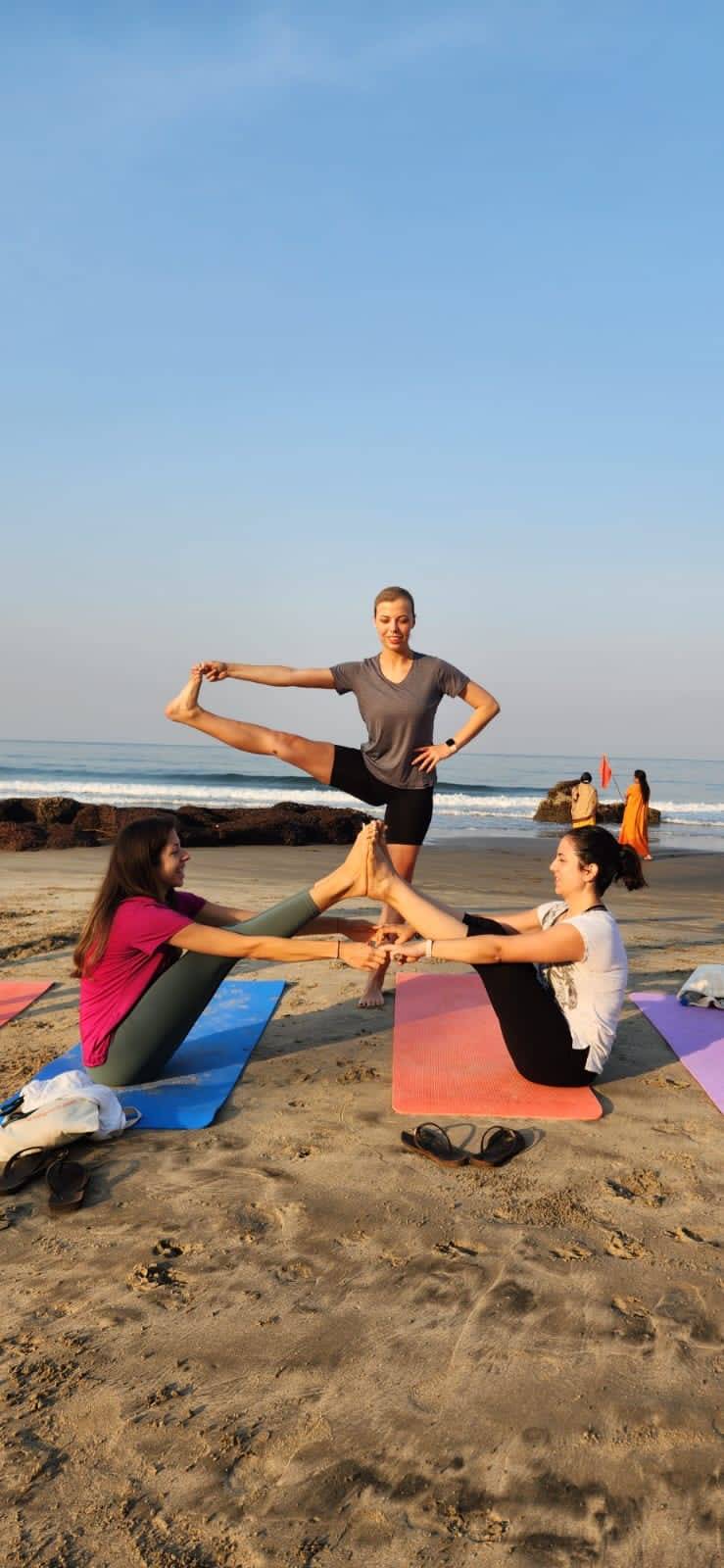
European travelers looking for wellness in India frequently come expecting yoga retreats, meditation sessions, and possibly a deeper exploration of spirituality. Those who visit often discover mindful lessons from India that they bring back, something much greater, more subtle, and more radically changing. The actual teachings are in the everyday pattern of Indian life, which teaches a more nuanced, more grounded way of being, not only in studying asanas or achieving pranayama.
From slowing down to embracing community, from eating consciously to simplifying one’s lifestyle, the mindful lessons from India that Europeans learn often become lifelong habits. This is the India that exists beyond the yoga mat, one that reveals how mindfulness may be a way of life rather than merely a technique.
In this blog, we examine the cultural education that motivates thousands of Europeans yearly to rethink their life, employment, food, and connections. These teachings are universally human and very inspiring.
Top 10 Mindful Lessons from India for Europeans
1. Slowing Down: The Art of Unhurried Living
European cities—whether Berlin, Paris, or London—go swiftly. Life is clock-driven, scheduled, and made to maximize efficiency. Many tourists bring this speed inside them to India, only to see that the country works on a totally different beat.
India shows the grace of not rushing.
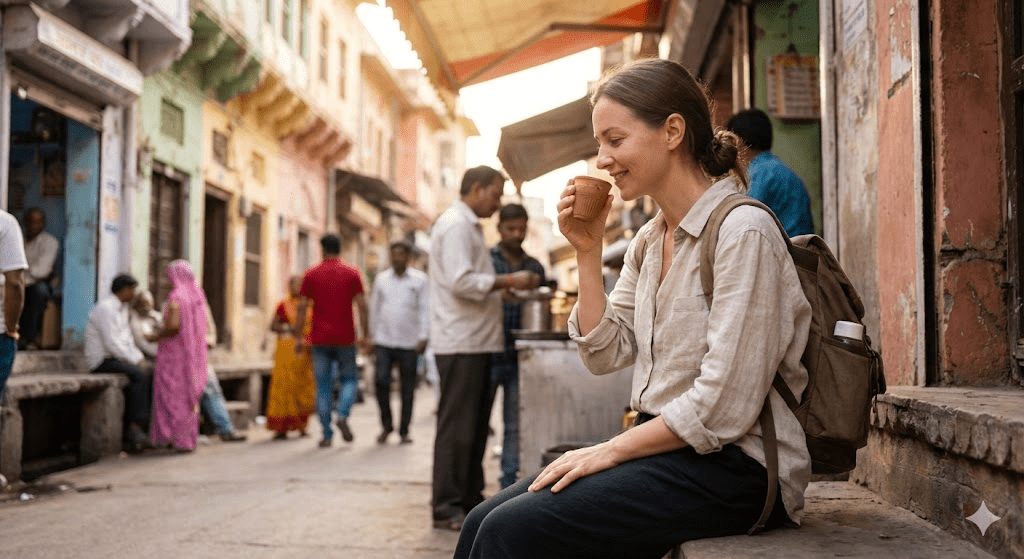
Things evolve naturally in India. Discussions develop at their own nice pace. Meals are enjoyed rather than “grabbed.” Waiting—for chai, the bus, or monsoon rain—becomes an experience rather than a bother.
For Europeans, this slower speed provides something very strong:
- A holiday from the oppression of immediacy.
- When you drop your pace:
- You see things.
- You form deeper links.
- You find breathing less difficult.
- You stop racing and start living.
Learning to live at a human speed rather than a mechanical one is one of the deep mindfulness India gifts.
2. Simplicity as a Way of Life
In Europe, minimalism has become fashionable—decluttering, capsule wardrobes, Scandinavian simplicity. India, however, imparts simplicity in a much more natural, honest manner.
Less, yet rich living.
Many Europeans are amazed at how Indian families operate with fewer material goods but greater emotional stability. What grabs attention is:
- For years, objects have been treasured and preserved.
- Food is made from scratch—easy but nutrient-rich.
- Clothes are carefully worn, frequently adapted, or repurposed.
- People are more important in celebrations than decorations.
This simplicity is not about scarcity. It’s about freedom—freedom from excessive consumption, rivalry, and
The message then becomes evident:
Simplicity is about needing less, not having less.
Many Europeans embrace the yoga lifestyle after seeing life in India’s villages, spiritual settlements, and houses; this realization then becomes central.
3. Community: The Heartbeat of Indian Living
In India, however, the idea of “we” frequently overrides “I.” Independence is a virtue in Europe. Living alone is normal, and personal space is non-negotiable.
Community is emotional nourishment in addition to social interaction.
Visitors notice:
- Neighbors recognize one another by name.
- Families keep in touch over generations.
- Food is distributed, not only eaten.
- Festivals bring whole communities together.
- Requesting assistance is not thought to be a sign of frailty.
- Many Europeans—frequently happily—are astonished by this strong social fabric.
Loneliness has evolved into a silent epidemic in the West, but India provides a cure:
- A sense of belonging from an actual human connection.
- As India naturally teaches, mindful living includes not only self-awareness but also relationships, empathy, and interdependence.
4. Food as Medicine and Ritual
For Europeans, one of the most important mindful lessons from India is India’s attitude to food—how it is cooked, ingested, shared, and interpreted.
- India sees food as prana, life energy.
- Travellers discover by way of Ayurveda, home cooking, and customary eating patterns:
- Food should be seasonal, local, and fresh.
- Spices cure as well as they taste.
- Meals ought to be hot, never cold.
- Eating is performed deliberately without distraction.
- Central to well-being is gut health.
Many Europeans come to appreciate:
- Ginger-lemon drink
- Milk of turmeric
- Tea of cumin
- Homemade ghee
- Millets and legumes
- Newly milled spices
- Clay-pot cooking
These age-old customs help them to eat a better, more balanced diet—one based on timeless knowledge rather than fads.
Eating turns into a meditation technique.
- You masticate more slowly.
- You love tastes.
- Your body has your respect.
One of the most powerful yoga lifestyle teachings travelers bring home—and often go on for years—this is it.
5. Mindfulness in Everyday Actions
India teaches something even more profound:
- Mindfulness daily.
- You witness mindfulness in India in:
- A potter working with the clay
- A woman combing jasmine into her hair
- A clerk setting fruits
- At daylight, a priest is lighting a candle
A chaiwalá skillfully balancing cups
These daily activities demonstrate immersion, presence, and patience. Indians inherently exercise mindfulness even though they might not use the term.
This lets Europeans grasp:
Mindfulness is awareness, not only meditation.
The lesson is basic but life-changing:
- You can be conscious while walking, eating, cooking, cleaning, or going to and from work.
- This way of life is not a method.
6. Acceptance: A Soft Strength
Europe is solutions-oriented; every issue has to be solved quickly. In contrast, India adopts a softer, more philosophical stance.
The core of Indian resiliency is “This too shall pass.”
Indians often react to managing traffic craziness, to heatwaves, from red tape to life’s unpredictability:
- patience
- laughter
- free
- belief
- adaptability
This attitude, neither passive nor aggressive, instructs Europeans in the power of acceptance. Acceptance is not letting go. It means negotiating life devoid of needless resistance. This emotional flexibility develops into a delicate but vital lesson in conscious living.
7. Spirituality as a Daily Companion
For Europeans, spirituality usually occurs only once in a while. In India, it is woven into daily life. Small ceremonies bring about great inner calm.
Travelers see:
- Burning of incense in households
- Morning devotions
- Lighting a diya at twilight
- Gratitude Before Food
- reverence for the natural world
- reverence for the elderly
These basic ceremonies ground and clear the mind. This is where the mindfulness India impact becomes very individual—spirituality becomes less about faith and more about mindful living.
8. Nature as a Teacher
India presents vistas needing quiet, whether they be the ghats of Rishikesh, the backwaters of Kerala, the Himalayas, or rural farms.
Europeans sometimes rediscover:
- sitting by a river’s pleasure
- The restorative properties of trees
- mountain stillness
- the regular pattern of sunrise and evening
- India claims you only have to see nature; you do not need to “escape.”
Many years after the trip, this reconnection assumes great importance in aware living.
9. Joy in little things
Indian life honors the small things: a cup of chai, a monsoon sprinkle, a street chat, a festival dance, a shared mango.
- Here, Europeans frequently rediscover childish delight.
- Happiness is simple because life is lived simply.
- Not everything has to be fast.
- Not every second has to be perfect.
- Not every day needs to be productive.
Among the most freeing mindful lessons from India is this rethinking of happiness.
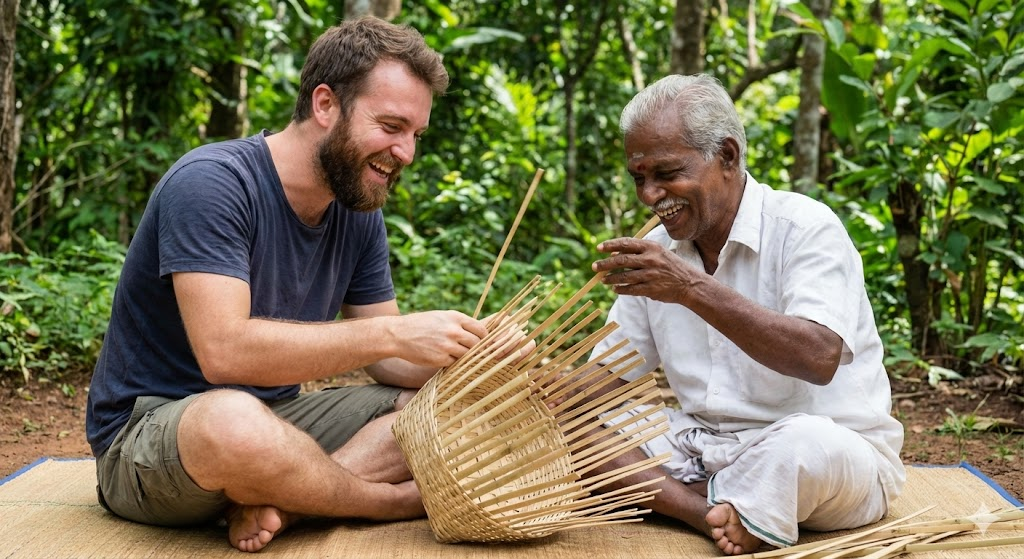
10. Wealth redefined
The most profound understanding Europeans acquire may be this:
- Wealth is time, connections, health, and quiet in addition to money.
- Indian wisdom replaces measurements with meaning.
- It says that success without harmony is hollow.
Guests sometimes come back with:
- More appreciation
- less tension
- more balance
- healthier behaviors
- Rich human contact
- They finally come back smarter.
- Gift of India: A Conscious Living Philosophy
- Yes, India instructs yoga.
But it also shows how to:
- Breath
- Stop
- hear
- split
- heal
- make simple
- connect
- alive
These are ideas that remain long after the suitcases are unmade and the flights are completed. They help people’s lives, change priorities, and bring about a big internal change.
India goes beyond your practice influencing.
It changes your way of life.
And that is the actual gift—
Mindfulness that permeates every aspect of your daily existence.