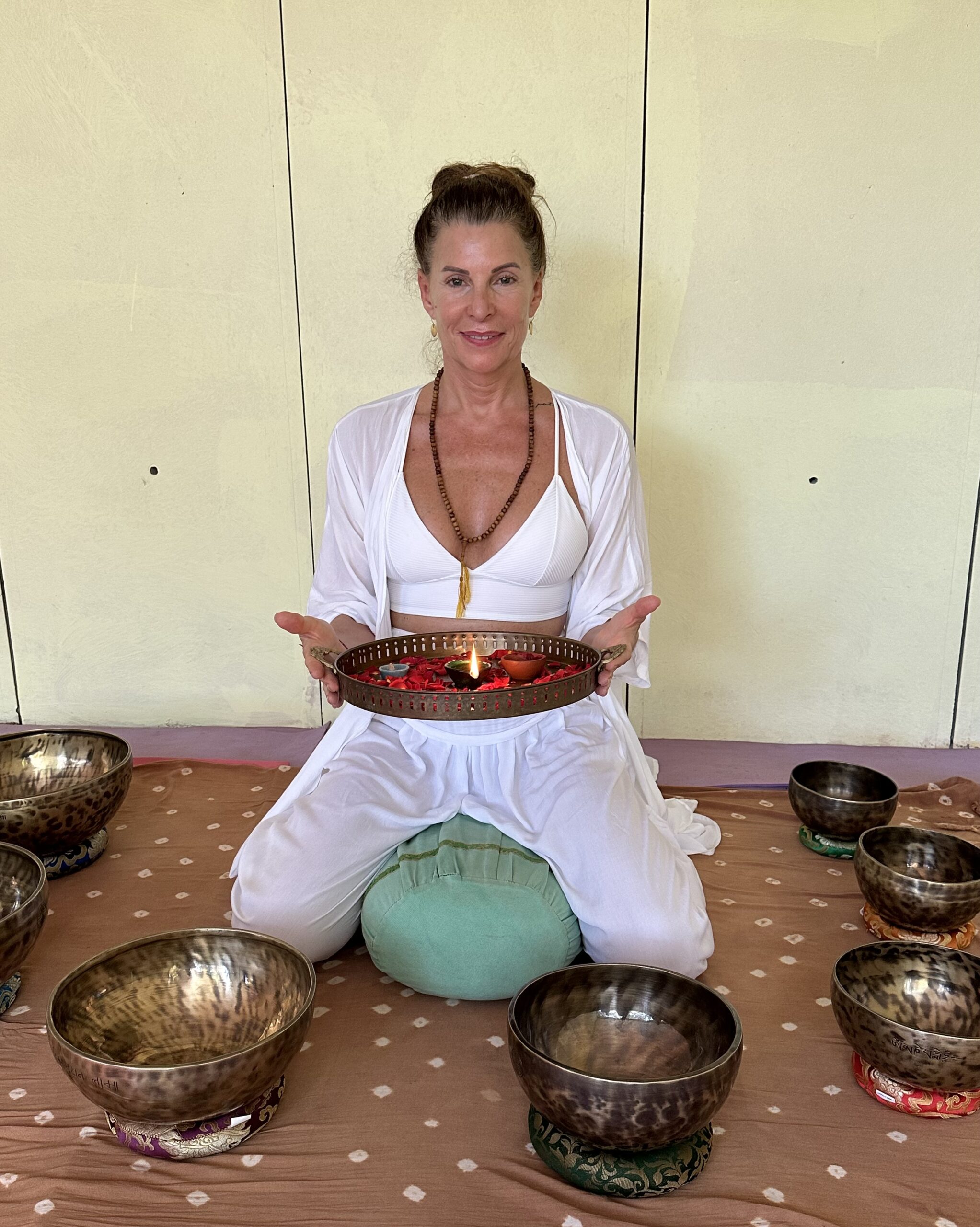
Combining ancient spiritual customs with current scientific investigation, sound treatment has grown to be among the most fascinating wellbeing trends of recent years. Among its many techniques is the particularly noteworthy mantra chanting, which delves into the science of mantra meditation. Based in millennia-old traditions—notably within yogic and Buddhist beliefs—mantras are thought to have a transforming influence on the body, mind, and spirit. Still, is science behind these age-old arguments? Some have claimed for millennia that chanting mantras may heal and improve well-being. Can one really heal and improve well-being?
This blog examines the science behind sound treatment, especially mantra chanting, and how modern Western studies are starting to corroborate its advantages. We will investigate how mantras might be used as a weapon for physical and mental well-being in the modern environment by diving into the relationship between sound frequencies, brainwaves, and neuroplasticity.

Sound Healing: A Brief Overview
A healing approach known as sound healing manipulates the body’s energy and vibrational states by means of a variety of sound frequencies. The fundamental premise is that sound—whether from musical bowls, tuning forks, or vocalisations like chanting—can affect the body energetically as well as physically.
According to the yogic tradition, mantras are sacred words or phrases that are recited over and over to either facilitate meditation or promote healing. The term `mantra’ comes from two roots in Sanskrit: `man’ (the mind) and `tra’ (a tool), so it defines the relationship between the mind and a tool for focusing the mind. Mantras, when repeated, create sound waves that resonate at certain frequency levels. The sound waves may create an emotional state, increase concentration, or enhance spiritual awareness.
The Neuroscience of Sound and Vibration
Understanding how sound affects the brain has advanced significantly thanks to the Science of Mantra Meditation. Usually centered on how particular sound frequencies impact brainwave patterns and therefore influence mental and emotional well-being, research on sound healing usually asks questions.
1. Brainwave Synchronization and Altered States of Consciousness
Categorizing brainwaves by frequency: each one correlates with several degrees of consciousness as electrical impulses in the brain.
Deep sleep and restorative conditions are connected with delta waves (0.5–4 Hz).
Associated with profound meditation, inventiveness, and relaxation, theta waves have a frequency of 4 to 8 Hz.
Alpha waves (8–12 Hz): often seen in meditative conditions, these arise during relaxed yet awake states.
Associated with active thinking, problem-solving, and alertness, beta waves range from 12 to 30 Hz.
Higher cognitive processes and peak mental states are linked to gamma waves (30–100 Hz).
When someone chants a mantra repeatedly, they come to a place where their brainwave patterns become aligned with the pulse of the sound they’re making. Repeating a mantra such as Om can bring on a meditative state, which may help you to be relaxed, reduce stress, and improve your ability to concentrate. Entrainment is when brainwaves align with each other due to external stimuli, such as sounds, that influence the baseline frequency of the brain.
According to studies in the International Journal of Yoga, mantra chanting can improve theta and alpha brainwave activity. Relaxation, decreased anxiety, and better emotional control are all associated with these brainwave states, therefore suggesting chanting might really help one’s mental health.
2. The Power of Vibration and Frequency
Sound frequencies can have a direct influence on the physical body; one of the fundamental concepts in sound healing is this. As with everything else, including our bodies, everything vibrates at a specific frequency. Frequencies of external sounds that match or harmonically relate to your body’s natural vibrations can have a positive healing effect. The concept of vibration as being medicinal is supported by evidence from both biology and physics. Studies by biologist Hans Jenny have demonstrated the effects of sound waves on the formation of shapes in particles like sand and water (known as cymatics).
This concept can also apply to the way sound waves impact the human body; there is evidence that sound waves can help reduce swelling, heal damaged areas, and change the structure of tissue. Additionally, many sound frequencies used in Tibetan singing bowls (approximately 432 Hz) are reported to assist with relaxation and recovery by resonating with frequencies found within the human body. While many studies need to be conducted to establish specific sound frequencies connected to particular health benefits, the available information supports the idea that sound healing is a viable approach in conjunction with other health practices.
3. Mantra Chanting and the Nervous System
Physiologically, mantra chanting can activate the parasympathetic nervous system, which governs the body’s relaxation reaction. By relaxing the nervous system, mantra chanting may help to lower the levels of cortisol—the stress hormone—while also boosting the release of neurotransmitters like dopamine and serotonin that are linked to happiness and emotional balance.
According to a 2018 study in the journal Frontiers in Psychology, participants’ heart rate and respiratory rate were much reduced by chanting—which included mantras—suggesting a direct calming influence on the body. Deep meditation, yoga, or mindfulness exercises cause this parasympathetic nervous system activation, which is comparable to what occurs during those disciplines.
Furthermore, the concentrated focus needed for mantra chanting resembles the effects of mindfulness, therefore helping to clear emotional regulation, alleviate anxiety, and improve mental clarity. In this sense, mantra chanting is not only a spiritual activity but also a psychological tool to help people achieve wellbeing in the contemporary world.
The Mental Health Benefits of Mantras
Though the physical consequences of mantra chanting are sometimes discussed, its mental health advantages should not be underplayed. Modern psychological research supports the notion that the Science of Mantra Meditations has the potential to treat a range of mental health problems, including PTSD, depression, and anxiety.
1. Reducing Anxiety and Stress
Particularly when done with deep breathing, mantra chanting can greatly help to relieve stress and worry. The cyclical quality of the exercise has been demonstrated to foster awareness, which in turn helps control worried ideas. Participants who participated in chanting and sound healing saw a decrease in worry and tension, one study released in Psychology of Music in 2015 found.
Furthermore, mantra chanting helps to relieve the effects of stress by motivating people to concentrate on the mantra rather than dwell on unpleasant ideas and thereby create a sense of calm.
2. Improving Focus and Mental Clarity
Mantra reciting can also sharpen focus and attention. One cause of this is the single-task orientation of the exercise. Practitioners can enter a state of intensified focus, which has been connected to enhancements in cognitive ability, by concentrating on the tone of the mantra and the vibration it produces.
Studies reveal that deliberate, organized focus techniques like mantra chanting can help the brain be trained to avoid interruptions, therefore improving cognitive performance in other spheres of life.
3. Promoting Emotional Balance
Chanting mantras might help stabilize emotions by moving the body from a sympathetic (fight-or-flight) condition to a parasympathetic (rest-and-digest) one. Managing mood swings and controlling feelings gets easier as the body calms down. The mental discipline needed in chanting can also empower one, therefore supporting emotional resiliency.
The Power of Intention in the Science of Mantra Meditation
One especially distinctive feature of mantra chanting is the strength of intention. In many spiritual customs, mantras have specific meanings or intentions and are not just noises. The theory is that when people recite a mantra with a specific intention or objective in mind—whether for healing, peace, or manifestation—the frequency of the mantra matches the person’s interior wishes, thereby enabling those wishes to come true.
The modern psychological view of intention-setting and visualization, which has been related to beneficial outcomes including increased self-empowerment and goal accomplishment, is found in this idea. Science of Mantra Meditation helps in establishing precise goals, which can affect the brain’s neural pathways and improve motivation, therefore implying that the mind’s concentrated purpose and the vibrational effects of sound might be linked.
Conclusion: Science of Mantra Meditation as a Modern Wellness Instrument
To sum up, the science of mantra meditation is a discipline that perfectly connects modern neuroscience with ancient customs. Western research increasingly backs the theory that sound, vibration, and purpose can improve emotional, mental, and even physical health. The scientific evidence for the advantages of mantra chanting is expanding, from lowering stress and anxiety to improving attention and emotional equilibrium.
For the informed European audience searching for evidence-based spirituality, adding mantra chanting to one’s wellness regimen provides a scientifically backed approach to accessing a deeper level of self-awareness, peace, and equilibrium. Whether you view mantra chanting as a spiritual activity, a mindfulness method, or a therapy tool, the scientific evidence for its transformational potential in the current world is very persuasive.
Practices like sound healing remind us that the mind-body connection is far more complex and strong than we may have once thought, as we keep fusing old knowledge with contemporary scientific discoveries.