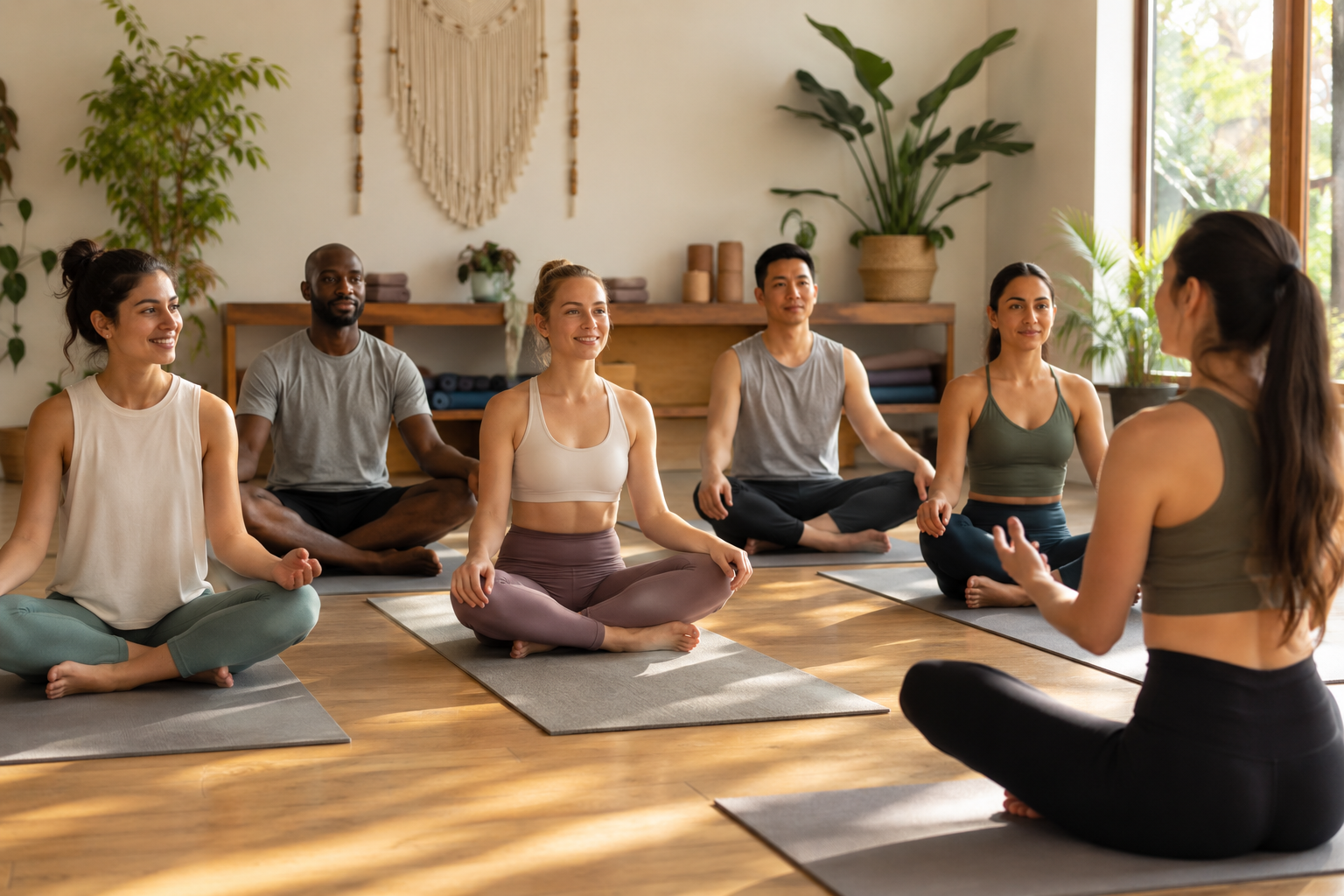
Starting something new is rarely easy, and stepping into a yoga studio for the first time is no exception. Between unfamiliar pose names and a stream of Sanskrit terms, becoming a yogi can feel like learning a new language before you’ve even unrolled your mat. On top of that, moving your body into unfamiliar shapes can stir up self-doubt or frustration if you’re not prepared for it.
That’s exactly why beginning your journey with a class built for yoga for beginners matters so much. A well-structured Level 1 class starts from the absolute basics. It assumes no prior knowledge, introduces the language and the poses side by side, and makes the practice approachable — even if you’ve never heard the word “asana” before today.
Also read: Everything about ancient yoga practice
The Truth About Yoga for Beginners
One of the most common things we hear from new students is, “I’m not flexible enough for yoga.” In reality, yoga is one of the gentlest and most effective ways to build flexibility, strength, and overall well-being — not a prerequisite you need before you start.
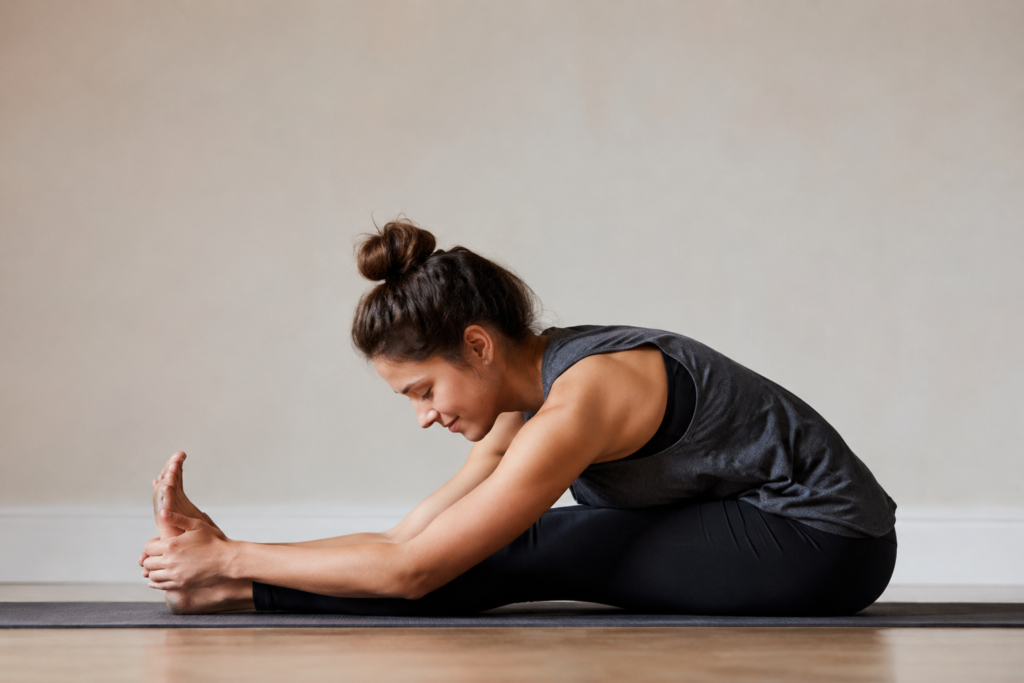
Yoga does have a real physical component, and a consistent practice can absolutely help you build a stronger, more toned body over time. But the benefits go well beyond the physical. As you grow more comfortable on the mat and yoga becomes part of your routine, the practice naturally starts to feel closer to meditation. That shift happens because of the steady focus on breath awareness and control that runs through every class.
Combine that breath awareness with the endorphins released during physical practice, and you get the calm, clear-headed, energized feeling so many students describe after their very first yoga for beginners class.
How to Prepare for Your First Yoga Class
Now that you know why yoga is worth showing up for, let’s cover exactly how to prepare for that first session. The good news: you need very little to get started, and the most important thing to bring is an open mind.
Still, showing up comfortable makes a real difference. Here’s what to keep in mind:
1. A Yoga Mat
For your very first class — especially if you’re joining an online session — a folded towel or any spare mat on the floor works just fine while you figure out what you actually need. Most studios also provide mats for beginners. If you do decide to invest in your own, choose based on your preference: thin or thick, sticky or cushioned, depending on how your joints and grip feel most supported.
2. Comfortable, Snug-Fitting Clothing
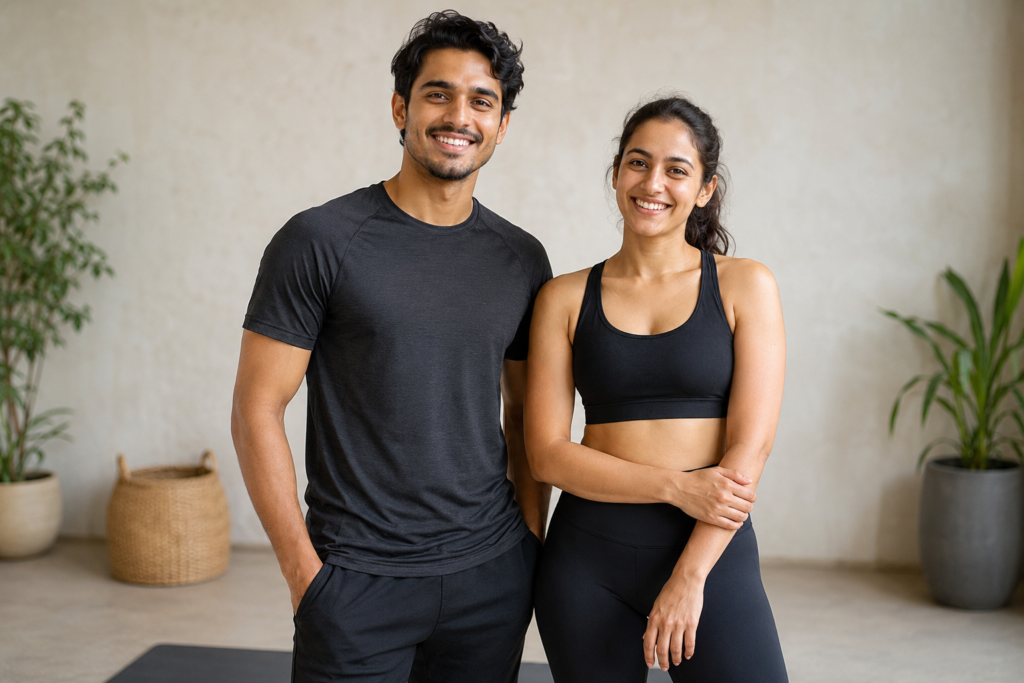
For men, this usually means shorts, running pants, or yoga leggings paired with a breathable T-shirt or exercise singlet. For women, loose-fitting yoga pants or leggings with a breathable top work well. There’s no “right” or “wrong” yoga outfit — the only rule is that it should stay snug enough around the waist that nothing slides while you move through poses.
3. A Small Towel
As your body moves through a flow, it naturally generates heat to protect your muscles and joints from injury — which means you will sweat, even in a beginner class. If that’s something you’re conscious of, keep a small towel nearby to wipe down your mat and stay comfortable through the session.
Frequently Asked Questions
Is yoga hard for beginners? No. A properly structured yoga for beginners class is designed to be approachable for people with zero prior experience, breaking down poses and terminology step by step.
Do I need to be flexible to start yoga? Not at all. Flexibility is a result of consistent yoga practice, not a requirement to begin one.
What should a beginner bring to their first yoga class? A yoga mat (or a towel if you don’t have one yet), comfortable snug-fitting clothing, a small towel for sweat, and an open mind. Most studios provide mats for first-time students.
How often should a beginner practice yoga? Starting with two to three sessions a week is a realistic pace for most beginners, allowing your body time to adjust while still building a consistent habit.
What is the difference between yoga styles for beginners? Different styles emphasize different things — some focus on gentle stretching and breath work, while others are more energetic. If you’re curious how styles connect to specific chakra yoga styles, it’s worth exploring before you commit to one path.
Conclusion
Yoga for beginners isn’t about arriving flexible, strong, or fluent in Sanskrit — it’s about showing up with an open mind and letting a well-structured class guide you the rest of the way. With the right preparation and a class designed for where you actually are, the intimidation fades quickly and the benefits — physical, mental, and everything in between — start to show up fast.
If you’re ready to go deeper, Oceanic Yoga School is one of the best places to learn yoga in Goa, offering a 200-Hour Yoga Teacher Training in Goa certified by Yoga Union USA — designed to prepare you across every dimension of yoga practice.