
Sound has always held a sacred place in yogic tradition. Long before physical postures became the public face of yoga in the West, practitioners understood that certain sounds — chanted with focus and intention — could steady the mind, open the heart, and awaken deep reserves of inner energy. These sounds are known as yoga mantras.
A mantra is more than a phrase to repeat. In the yogic tradition, each mantra carries its own vibration, and that vibration is said to correspond to a particular state of consciousness. Traditionally, mantras were transmitted from teacher to student — the Guru-Shishya relationship — so that the sound could be received with the right context and intention, not just recited as words.
You don’t need years of study to begin. Below are five of the most respected and widely practiced yoga mantras, along with their meaning and why they matter.
Why Chant Yoga Mantras?
Regular mantra practice is said to offer several benefits:
- Mental clarity – repetitive chanting quiets mental chatter and improves focus
- Emotional balance – many mantras are built around themes of peace, gratitude, and compassion
- Energetic alignment – certain sounds are believed to stimulate specific energy centers (chakras)
- A sense of connection – shared mantras link the practitioner to a much older lineage of seekers
With that context in mind, here are five essential mantras worth learning.
1. Om — The Universal Sound
Om (or Aum) is considered the seed sound of the universe — the vibration believed to underlie all creation. When chanted slowly, it can be felt physically, from a low hum in the chest to a resonance at the crown of the head.
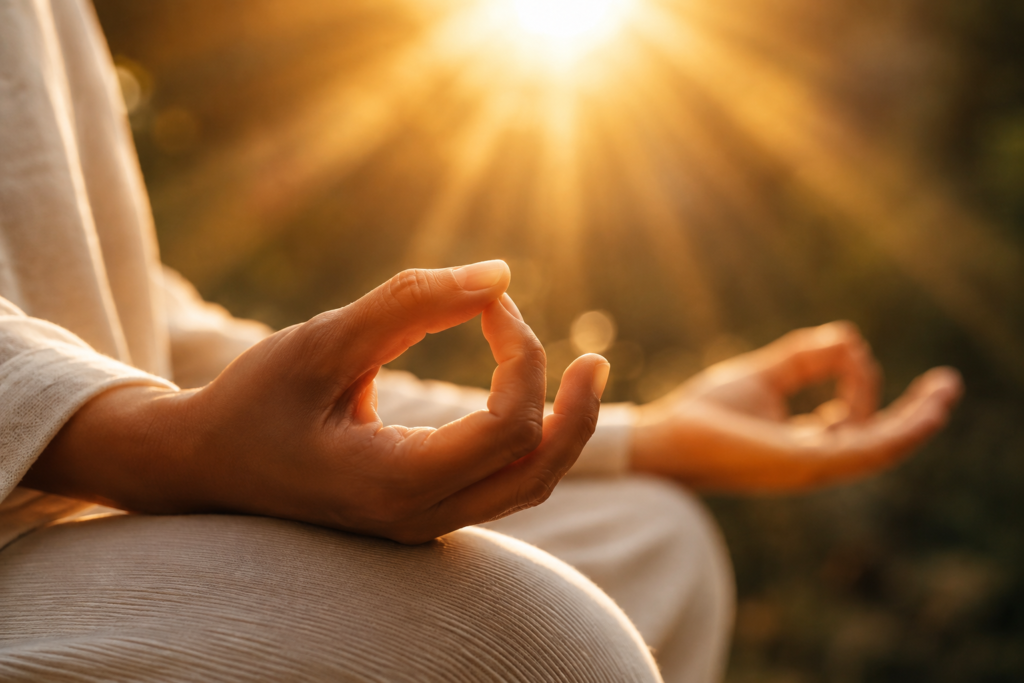
Many practitioners begin their meditation or yoga practice with Om because of its simplicity and its association with opening the throat chakra, the energy center linked to voice and self-expression.
How to practice: Sit comfortably, take a deep breath, and chant “Om” slowly on the exhale, letting the sound taper naturally. Repeat for several rounds.
2. Sarvesham Svastir Bhavatu — A Prayer for Universal Wellbeing
Sarvesham Svastir Bhavatu, Sarvesham Shantir Bhavatu, Sarvesham Purnam Bhavatu, Sarvesham Mangalam Bhavatu
This is a Shanti (peace) mantra that asks for wellbeing, peace, fulfillment, and auspiciousness for all beings — not just the person chanting it. It reflects a core idea in Indian philosophy: that all life shares a common source, and true peace can’t be selective.
This sentiment echoes the well-known phrase Vasudhaiva Kutumbakam — “the world is one family.” Chanting this mantra regularly is traditionally believed to cultivate compassion and a broader sense of connection to others.
3. The Gayatri Mantra — Invoking Clarity and Wisdom
Om Bhur Bhuvaḥ Swaḥ, Tat Savitur Vareñyaṃ, Bhargo Devasya Dhīmahi, Dhiyo Yo Naḥ Prachodayāt
Drawn directly from the Rig Veda, the Gayatri Mantra is one of the oldest and most revered mantras in Hindu tradition. Its meaning is roughly: We meditate on the radiant glory of that divine light; may it illuminate and inspire our understanding.
The Gayatri Mantra is closely associated with the energy of the sun and is often chanted at sunrise. Practitioners chant it seeking clarity, wisdom, and the strength to move through hardship.
4. The Shanti Mantra — A Call for Universal Peace
Sarve Bhavantu Sukhinaḥ, Sarve Santu Nirāmayāḥ, Sarve Bhadrāṇi Paśyantu, Mā Kaśhchid Duḥkha Bhāg Bhavet
This is one of the most widely recited peace mantras in Hindu tradition, also drawn from Vedic sources. It translates roughly to: May all be happy, may all be free from illness, may all see what is auspicious, may no one suffer.
Like the mantra above, it emphasizes collective wellbeing over individual gain — a recurring theme in yogic philosophy that views peace as something meant to be shared.
5. Asato Ma Sad Gamaya — A Prayer for Truth and Light
Asato Mā Sad Gamaya, Tamaso Mā Jyotir Gamaya, Mṛtyor Mā Amṛtaṁ Gamaya
Translation: Lead me from the unreal to the real, from darkness to light, from death to immortality.
This mantra, also from the Upanishads, is a prayer for truth, awakening, and liberation from ignorance. It’s often chanted during times of transition or uncertainty, as a reminder that clarity and understanding are always within reach.
How to Start a Mantra Practice
If you’re new to mantra chanting, keep it simple:
- Choose one mantra to start with — Om is a natural first step.
- Set aside 5–10 minutes in a quiet space.
- Sit with a straight spine, close your eyes, and breathe naturally.
- Chant the mantra slowly, either aloud or silently, for several rounds — a mala (108-bead strand) is traditionally used to keep count.
- Sit in stillness for a minute afterward before returning to your day.
Consistency matters more than duration. A few focused minutes daily will generally have more impact than an occasional long session.

Frequently Asked Questions
What is a yoga mantra? A yoga mantra is a sacred sound, word, or phrase — usually in Sanskrit — that is repeated during meditation or yoga practice to focus the mind and connect with a specific intention or energy.
Which yoga mantra is best for beginners? Om is generally considered the best starting point. It’s short, universally recognized, and doesn’t require memorizing a longer verse.
Do I need a teacher to learn mantras? Traditionally, mantras were passed from teacher to student to ensure proper understanding and pronunciation. While this lineage-based transmission is still valued, many people today learn foundational mantras like Om or the Gayatri Mantra independently and benefit from consistent practice.
How many times should I chant a mantra? A common practice is chanting a mantra 108 times, tracked using a mala. However, even a few minutes of repetition can be beneficial, especially for beginners.
Do yoga mantras have to be in Sanskrit? Most traditional yoga mantras are in Sanskrit because of the specific sound vibrations associated with that language. That said, some practitioners adapt or translate mantras into their native language, though the original Sanskrit is generally considered to carry the strongest traditional significance.
Can chanting mantras replace meditation? Mantra chanting is a form of meditation itself. It’s often used as an anchor to keep the mind focused, similar to how breath awareness is used in other meditation styles.
Conclusion
Yoga mantras are far more than words — they’re tools for focus, emotional balance, and connection to a tradition thousands of years old. Whether you start with the simplicity of Om, the universal compassion of a Shanti mantra, or the wisdom-seeking verses of the Gayatri Mantra, the key is consistency. Even a few minutes of mindful chanting each day can bring noticeable calm and clarity over time.
Start small, choose one mantra that resonates with you, and let the practice grow naturally from there.