Yin yoga is often described as slow, gentle, and deeply relaxing but many beginners hesitate before trying it. Holding poses for several minutes, staying still, and feeling deep sensations can raise questions like “Is yin yoga too intense for beginners?” or “Can beginners do yin yoga safely?”
The truth is that yin yoga is one of the most beginner-friendly yoga styles when practiced mindfully. This expanded guide explains exactly how beginners can approach yin yoga safely, what benefits to expect, common mistakes to avoid, and how yin yoga fits into a complete yoga or fitness routine.
What Makes Yin Yoga Different From Other Yoga Styles?
Unlike active yoga styles that focus on strength, balance, or calorie burn, yin yoga works on a deeper physiological level.
In yin yoga:
- Muscles stay mostly relaxed
- Poses are held long enough to gently stress connective tissues
- Stillness allows joints and fascia to adapt gradually
- Breath and awareness are central to the practice
For beginners, this means less pressure to “perform” and more space to learn how their body responds to movement and stillness.
Is Yin Yoga Good for Beginners With No Yoga Experience?
Yes. Yin yoga is suitable even for complete beginners, including those who have never practiced yoga before.
It works well for beginners because:
- Poses are simple and repetitive
- There is no fast flow to memorize
- Transitions are slow and controlled
- Props make poses adaptable to all body types
Beginners often feel more confident starting with yin yoga than with fast-paced classes that can feel overwhelming.
Who Benefits the Most From Yin Yoga as a Beginner?
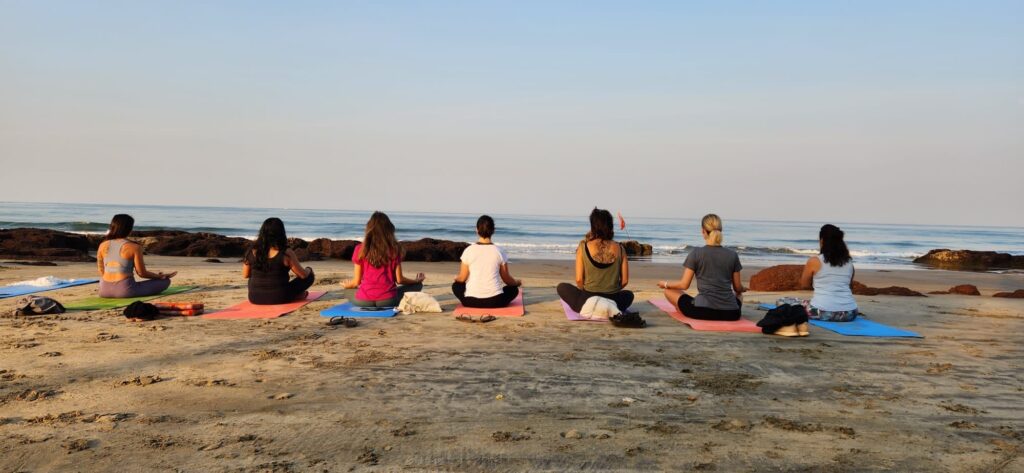
Yin yoga is especially helpful for beginners
- Feel stiff or inflexible
- Sit for long hours at work
- Experience stress or mental fatigue
- Want a gentle entry into yoga
- Prefer calm, quiet practices
It is also a great option for beginners returning to movement after a long break.
When Yin Yoga May Not Be Ideal for Beginners
While yin yoga is accessible, it is not ideal for every beginner in every situation.
Beginners should be extra careful if they:
- Have recent joint injuries
- Experience chronic knee, hip, or spinal pain
- Are extremely flexible or hypermobile
In these cases, yin yoga should be approached with shorter hold times and professional guidance.
How Yin Yoga Helps Beginners Physically and Mentally

Physical Benefits for Beginners
- Gradual improvement in flexibility
- Increased joint mobility
- Reduced stiffness in hips, lower back, and shoulders
- Better posture awareness
Mental and Emotional Benefits
- Calms the nervous system
- Improves focus and patience
- Reduces anxiety and stress
- Encourages mindfulness and body trust
These benefits make yin yoga especially valuable for beginners who feel disconnected from their bodies.
Common Beginner Mistakes in Yin Yoga (And How to Avoid Them)
1. Forcing Flexibility
Beginners often push deeper than their body allows. Yin yoga works best when you stop at the first strong sensation, not pain.
2. Skipping Props
Props are not signs of weakness. They protect joints and make poses sustainable.
3. Holding Poses Too Long
Beginners do not need long holds. Shorter holds are safer and more effective early on.
4. Ignoring Joint Sensations
Sharp pain, numbness, or tingling are signals to come out of a pose immediately.
Best Yin Yoga Poses for Beginners
Beginner-friendly yin yoga poses include:
- Supported Child’s Pose
- Butterfly Pose (with cushion support)
- Reclined Twist
- Supported Forward Fold
- Legs-Up-the-Wall
These poses gently open the hips, spine, and legs without excessive strain.
Yin Yoga vs Hatha Yoga for Beginners

Many beginners ask whether yin yoga or hatha yoga is better.
- Yin yoga is better for relaxation, flexibility, and joint health
- Hatha yoga is better for learning alignment, posture, and basic strength
For beginners, combining both styles offers the best balance.
Can Beginners Use Yin Yoga for Fitness or Weight Loss?
Yin yoga is not designed for fat loss or cardiovascular fitness, but it still supports overall health by:
- Improving recovery
- Reducing stress-related weight gain
- Supporting mobility for other workouts
Beginners focused on fitness often pair yin yoga with walking, strength training, or more active yoga styles
Please also read how yoga help to reduce weight.
How Often Should Beginners Practice Yin Yoga?
For beginners:
- 2–3 sessions per week is ideal
- Sessions can be 20–45 minutes
- Rest days are important for connective tissue recovery
Daily practice is possible if sessions are gentle and varied.
Signs You’re Practicing Yin Yoga Correctly as a Beginner
You’re doing yin yoga right if:
- Sensations feel deep but manageable
- Your breathing stays calm
- You feel relaxed after class, not sore
- Flexibility improves slowly over weeks
Progress in yin yoga is subtle, which is a sign of safe practice.
These queries are naturally answered in this article and help ranking:
- Is yin yoga good for beginners?
- Can beginners do yin yoga safely?
- Is yin yoga hard for beginners?
- How long should beginners hold yin yoga poses?
- Is yin yoga safe for stiff people?
- Should beginners do yin yoga every day?
- Yin yoga vs hatha yoga for beginners
Should Beginners Try Yin Yoga?
Yin yoga is an excellent starting point for beginners who want a slow, supportive, and mindful introduction to yoga. It builds flexibility, awareness, and mental calm without physical pressure or performance expectations.
When practiced patiently and safely, yin yoga helps beginners develop a strong foundation that supports any future yoga or fitness journey.
FAQs
1. How long should beginners hold yin yoga poses?
Beginners should usually hold yin yoga poses for 30 seconds to 2 minutes. Shorter holds allow the body to adapt without overstressing joints or connective tissue. As comfort and awareness improve, hold times can be increased gradually based on how the body responds.
2. Is yin yoga safe for stiff or inflexible beginners?
Yes, yin yoga is generally safe for stiff beginners when props are used and poses are kept within a comfortable range. The practice focuses on gentle stress rather than deep stretching, making it suitable for tight hips, backs, and legs when done mindfully and without force.
3. Should beginners practice yoga every day?
Beginners can practice yoga frequently, but daily sessions should remain gentle and varied. Most beginners benefit from 2–3 sessions per week, allowing connective tissue time to recover. Daily practice works best when sessions are shorter and not physically demanding.