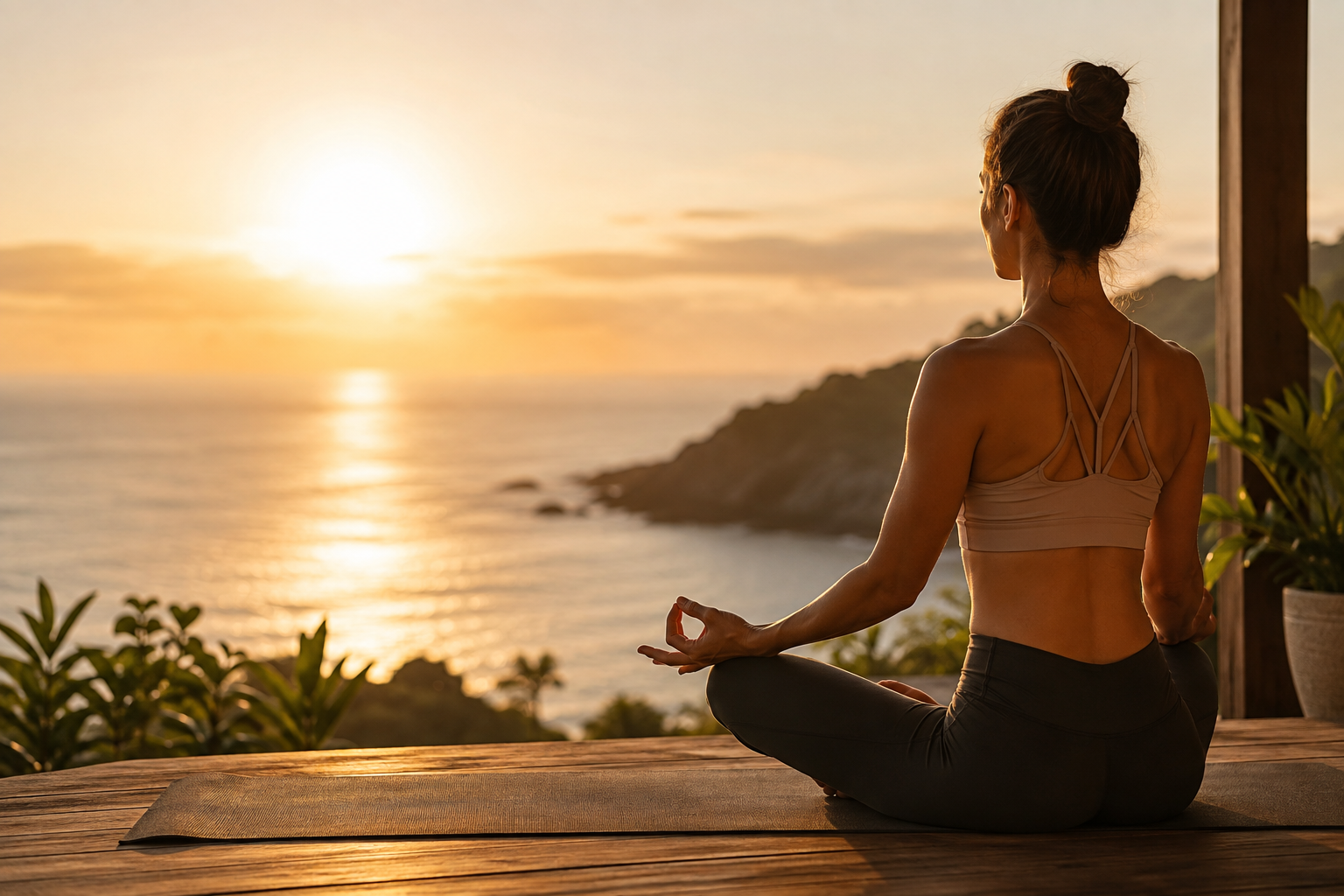
Yoga offers far more than flexibility and strength — it’s one of the most reliable tools for calming an overactive nervous system. If you’ve ever wondered whether Yoga To Relieve Stress actually works, the answer lies in how the practice interacts with your body’s stress response.
Life rarely slows down on its own. Deadlines, relationships, finances, and daily responsibilities can keep the mind in a constant state of alert. Left unchecked, chronic stress doesn’t just affect your mood — it disrupts sleep, digestion, libido, and even the quality of your relationships. This is exactly where Yoga To Relieve Stress becomes a genuinely practical, science-backed solution, one that a structured Yoga Teacher Training in India can help you understand and apply more deeply.
Why Stress Affects the Body So Deeply
When you’re stressed, your body shifts into “fight or flight” mode — a response driven by the sympathetic nervous system. In this state:
- Your heart rate speeds up
- Breathing becomes shallow and rapid
- Thoughts feel scattered and hard to control
This response is meant to be short-lived. But when it’s triggered repeatedly, day after day, the body never gets the chance to fully reset. Learning to consciously shift out of this state — through breath, movement, and stillness — is one of the most valuable skills yoga teaches.

Core Techniques for Yoga To Relieve Stress
Before diving into specific poses, these three foundational habits make every stress-relief practice more effective.
1. Relax the Body and Mind Through Breath Awareness
Deep, conscious breathing is one of the simplest ways to signal safety to your nervous system. Slow your inhales and exhales, and let your attention rest fully on each breath as it moves in and out of your body. As you do this, consciously soften each muscle group, one at a time.
2. Release Stored Emotional Tension
Stress doesn’t just live in the mind — it settles into the body. Starting from your head and slowly working down to your toes, bring gentle awareness to each muscle group and consciously let go of any tightness you notice along the way.
3. Stay Present With Yourself
Trying to silence racing thoughts rarely works. Instead, practice returning your attention to the present moment, again and again, without judgment. This is a skill that strengthens with consistent practice, not something you master overnight.
Also check out: 200–300 Hour Yoga Teacher Training
5 Yoga Poses To Relieve Stress
These five poses combine gentle movement and breathwork to relax tight muscles, lower heart rate, and calm the nervous system — while also giving your immune system a boost. Practice them individually or link them into a short daily sequence.
1. Mountain Pose (Tadasana)
Tadasana looks simple, but it’s the foundation for nearly every standing pose in yoga, which makes it worth learning properly.
How to do it: Stand tall with your feet parallel and hip-distance apart. Stack your ankles, knees, and hips evenly, keeping your hips level and your tailbone in a neutral position that follows your spine’s natural curve. Draw your shoulders down and back, away from your ears.
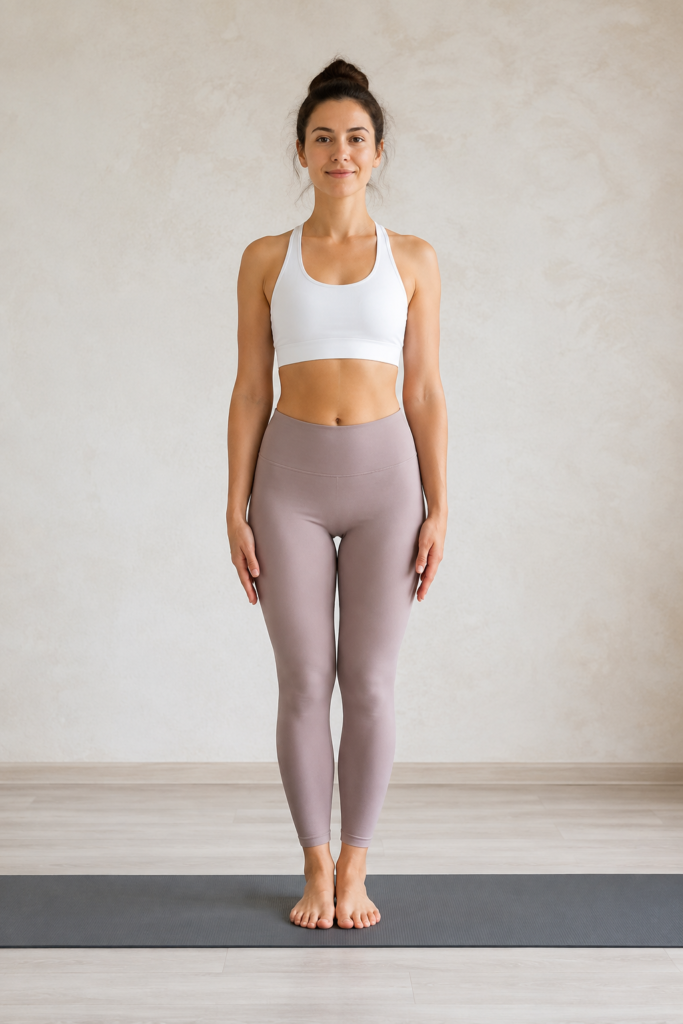
Benefits: Improves posture, builds physical stability, and cultivates a quiet sense of inner strength and body awareness.
Also read: The Power of Sleep for Aging Skin
2. Eagle Pose (Garudasana)
How to do it: Start in Mountain Pose. Bend your knees slightly, as if sitting back into a chair. Shift your weight onto your left foot, then lift your right leg and wrap it over your left thigh, hooking your right toes near your left calf. Wrap your arms in front of you in the same crossed fashion. Fix your gaze on one point ahead of you, breathe steadily, and sink a little deeper into the pose. Unwind, shake out your limbs, and repeat on the other side.
Benefits: The focus required for balance pulls your attention fully into the present moment. It also releases tension from the joints, eases pressure in the head, and supports immune function.
3. Legs-Up-The-Wall Pose (Viparita Karani)
How to do it: Sit with one hip against a wall, then swing your legs up so they rest straight against it as you roll onto your back. Scoot your hips as close to the wall as is comfortable. Stay here for at least five minutes.
Benefits: This is one of the most restorative poses for winding down after a long day. It stretches the back of the legs, neck, and chest, supports lymphatic drainage, improves circulation, and helps quiet an overactive mind before sleep.
4. Child’s Pose (Balasana)
How to do it: From a tabletop position, bring your big toes together and widen your knees. Sink your hips back toward your heels as you walk your hands forward and lower your chest and forehead toward the floor. Bend your elbows if your shoulders need more ease, or place a cushion under your torso for support. Breathe slowly for at least ten breaths, releasing tension with every exhale.
Benefits: Increases blood flow to the head, supports nervous system regulation, and helps calm overworked adrenal glands — the glands most affected by chronic stress. It’s often described as a pose that reconnects you with a sense of childlike ease.
5. Corpse Pose (Savasana)
Savasana is traditionally the final pose of a yoga session and, despite its simplicity, is often the hardest to master. Lying still and genuinely letting go doesn’t come naturally to most people — it’s a practiced state of surrender, not something you can force.
Benefits: Slows the breath, sharpens focus, quiets the mind, and supports better sleep and circulation. With consistent practice, Savasana becomes one of the most restorative parts of any yoga session.
FAQs About Yoga To Relieve Stress
1. How quickly does yoga help reduce stress?
Many people notice a calmer heart rate and slower breathing within a single session. Lasting changes in stress resilience typically build over weeks of consistent practice.
2. What is the best yoga pose for instant stress relief?
Legs-Up-The-Wall Pose (Viparita Karani) is one of the fastest ways to calm the nervous system, since it requires no strength or flexibility and immediately supports circulation and relaxation.
3. Can beginners practice Yoga To Relieve Stress without prior experience?
Yes. All five poses in this guide are beginner-friendly and can be modified with props like cushions or blocks for extra comfort and support.
4. How long should I practice yoga each day to manage stress?
Even 10–15 minutes a day, combining a few poses with breath awareness, can meaningfully lower stress levels over time. Consistency matters more than duration.
5. Is breathing more important than the poses themselves?
Breath awareness is the foundation. Poses create the physical conditions for relaxation, but slow, conscious breathing is what actively shifts the body out of fight-or-flight mode.
6. Where can I learn these techniques in more depth?
A structured program like Yoga Teacher Training in Goa can help you build a deeper, more personalized stress-relief practice under expert guidance.
Conclusion
Stress is unavoidable, but staying stuck in it doesn’t have to be. Yoga To Relieve Stress works because it addresses the problem at its root — the nervous system — through breath, movement, and stillness rather than just distraction. Whether you have five minutes or fifty, poses like Tadasana, Eagle Pose, Legs-Up-The-Wall, Child’s Pose, and Savasana offer a practical, accessible way to reset your body and mind each day.
If you’re ready to go beyond individual poses and build a complete, sustainable stress-relief practice, enroll in Yoga Teacher Training in Goa at Oceanic Yoga now and start learning directly from experienced teachers.