 Skip to main content Skip to footer
Most people think of yoga as a set of stretches and breathing exercises. But according to the sage Patanjali, yoga is actually a complete roadmap for personal growth — one that goes far beyond the mat. This roadmap is laid out in the 8 Limbs of Yoga, a system described in the Yoga Sutras that guides a person step by step from everyday habits to deep inner stillness.
In this guide, we’ll break down each of the 8 limbs of yoga in simple terms, explain how they build on one another, and look at the real physical and mental benefits of practicing them.
What Are the 8 Limbs of Yoga?
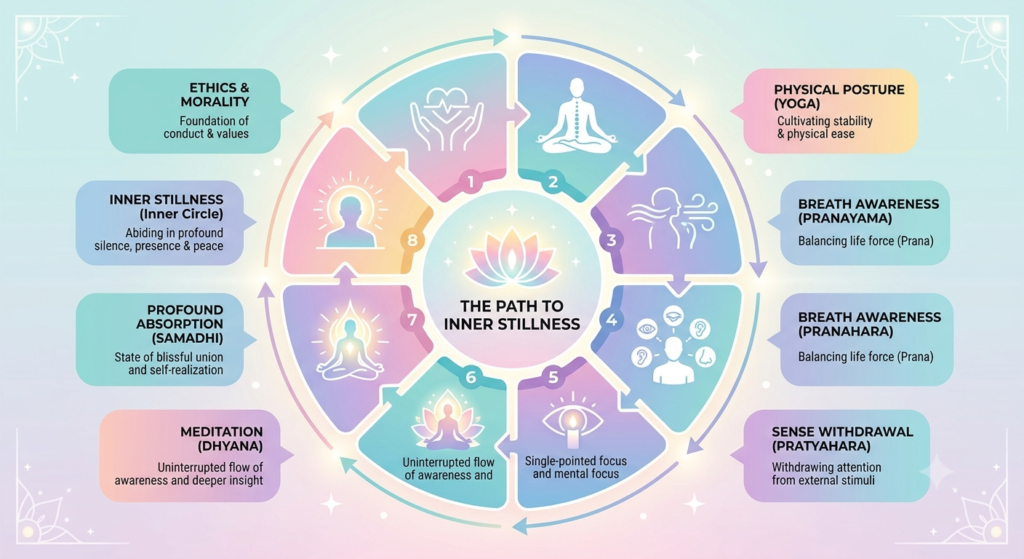
Patanjali’s Yoga Sutras organize the entire practice of yoga into eight progressive stages, known as Ashtanga (ashta = eight, anga = limb). Each limb prepares the practitioner for the next, moving from outward discipline to inward awareness. The eight limbs are:
- Yama – ethical restraints
- Niyama – personal observances
- Asana – physical posture
- Pranayama – breath control
- Pratyahara – withdrawal of the senses
- Dharana – concentration
- Dhyana – meditation
- Samadhi – union or ultimate stillness
Let’s look at each one in detail.
1. Yama – The Five Ethical Restraints
Yamas are the values a person must cultivate to grow as an individual. Patanjali describes five of them:
- Ahimsa (Nonviolence): The foundation of the Yamas. Practicing nonviolence — in action, speech, and thought — helps a person move away from anger and the negativity that comes with it.
- Satya (Truthfulness): Speaking and living honestly protects you from the complications that dishonesty creates.
- Asteya (Non-stealing): Respecting what belongs to others, materially and otherwise.
- Brahmacharya (Right use of energy): Traditionally linked to moderation of sensual desire, allowing energy to be directed toward growth.
- Aparigraha (Non-possessiveness): Letting go of the need to own or control. When you don’t cling to things, they no longer have a hold on you.
2. Niyama – The Five Personal Observances
If the Yamas are about what not to do, the Niyamas are about what you should do. They guide personal discipline and inner care, including cleanliness, contentment, self-discipline, self-study, and surrender to something greater than oneself.
3. Asana – Physical Posture
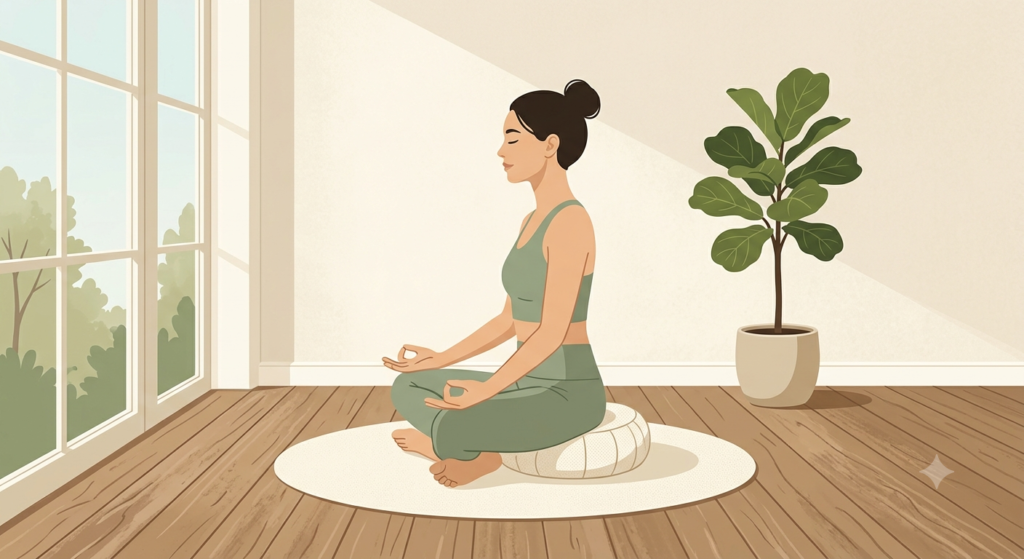
Asana refers to a steady, comfortable position that can be held with ease. An important distinction here: a posture that causes strain or discomfort isn’t a true asana. The goal is stability paired with relaxation.
4. Pranayama – Breath Control
Pranayama focuses on regulating the breath. By controlling how we inhale, hold, and exhale, we influence our energy levels, nervous system, and state of mind.
5. Pratyahara – Withdrawal of the Senses
This limb marks the turning point from the outer world to the inner one. Pratyahara is the practice of drawing attention away from external distractions and sensory input, redirecting focus inward.
6. Dharana – Concentration
Dharana is the practice of sustained, single-pointed focus — training the mind to rest on one object, thought, or point without wandering.
7. Dhyana – Meditation
Once concentration becomes effortless and continuous, it deepens into Dhyana, or meditation. This is where a person truly begins to connect with their inner self.
8. Samadhi – Union and Stillness
Samadhi is the eighth and final limb — a state of complete absorption where the sense of a separate “self” dissolves into union with the object of meditation. It’s often described as the harmony of body, mind, and spirit, reached only after moving through all the previous limbs.
Why the 8 Limbs of Yoga Matter Today
The idea of “liberation” described in the 8 Limbs of Yoga can feel abstract in a modern context. Realistically, most people don’t start a morning yoga routine chasing spiritual liberation — they start it to feel calmer, healthier, and more focused. And the good news is that yoga delivers on those goals too, even as a byproduct of the same practice that was designed for deeper purposes.
Physical Health Benefits
- Better circulation: Yoga improves blood flow, delivering more oxygen to the brain and every cell in the body.
- Faster healing: Regular practice supports tissue repair and the generation of healthy new cells.
- Healthier skin: Consistent practice, especially pranayama and dynamic styles like power yoga, is often linked to a natural, healthy glow.
Mental Health Benefits
- Lower anxiety: Yoga offers a genuine outlet in a world where stress and low mood are increasingly common.
- Sharper focus: It trains attention and reduces the tendency to overanalyze.
- Emotional balance: A calmer nervous system supports steadier moods and clearer decision-making.
As the saying goes, “a healthy mind lives in a healthy body.” Yoga, practiced through its eight limbs, is one of the most complete ways to build both.
👉 Read More: Yoga Teacher Training Goa
FAQs on the 8 Limbs of Yoga
Q1. What are the 8 limbs of yoga according to Patanjali?
The eight limbs are Yama (ethics), Niyama (self-discipline), Asana (posture), Pranayama (breath control), Pratyahara (sense withdrawal), Dharana (concentration), Dhyana (meditation), and Samadhi (union/stillness).
Q2. What is the main goal of the 8 limbs of yoga?
The system is designed to guide a practitioner from outer discipline toward inner awareness, ultimately leading to Samadhi — a state of deep stillness and union of body, mind, and spirit.
Q3. What are the 5 Yamas in yoga?
The five Yamas are Ahimsa (nonviolence), Satya (truthfulness), Asteya (non-stealing), Brahmacharya (right use of energy), and Aparigraha (non-possessiveness).
Q4. What is the difference between Yama and Niyama? Yamas are ethical restraints — things to avoid — while Niyamas are personal observances, or positive habits to actively cultivate.
Q5. Do I need to master all 8 limbs to benefit from yoga?
No. Most practitioners benefit from yoga at the level of Asana and Pranayama alone, gaining physical and mental health benefits. The deeper limbs unfold naturally with consistent, long-term practice.
Q6. How is Dhyana different from Dharana?
Dharana is focused concentration on a single point, while Dhyana is the sustained, effortless meditation that develops once that concentration deepens and flows continuously.
Conclusion
The 8 Limbs of Yoga offer far more than a workout routine — they present a complete framework for living with more awareness, discipline, and calm. From the ethical foundation of Yama and Niyama, through the physical grounding of Asana and Pranayama, to the deep inner work of Pratyahara, Dharana, Dhyana, and finally Samadhi, each limb builds on the one before it.
Whether your goal is better physical health, a calmer mind, or a deeper spiritual practice, understanding these eight stages gives you a clear path forward. You don’t need to reach Samadhi to benefit — even the first few limbs, practiced consistently, can transform how you feel in both body and mind.
