 Skip to main content Skip to footer
Bethenny Frankel once said, “Your diet is a bank account. Good food choices are good investments.” Ayurveda, the ancient Indian science of life, takes that idea a step further — it teaches that every bite you take shapes not just your body, but your thoughts, emotions, and behavior. Central to this teaching is the concept of the three gunas, or qualities of nature: Sattva (purity), Rajas (activity), and Tamas (inertia).
Foods in the Tamasic category are believed to cloud the mind and slow the body down. If you’ve ever wondered what belongs on a Tamasic foods list, why Ayurveda advises limiting them, and whether they’re always bad, this guide covers it all.
What Is Tamasic Food?
In Ayurvedic philosophy, Tamas represents inertia, heaviness, and darkness. Food classified as Tamasic is thought to carry that same low, dull energy into the person who eats it. Rather than nourishing clarity and vitality, these foods are said to leave you feeling sluggish, foggy, and unmotivated.
It’s worth noting that “tamasic” isn’t only about what you eat — it’s also about how you eat. Overeating, eating too fast, eating stale or reheated meals, or eating without attention can turn even a simple dish tamasic in effect.
The Complete Tamasic Foods List
Here are the foods and habits Ayurveda typically places in the Tamasic category:
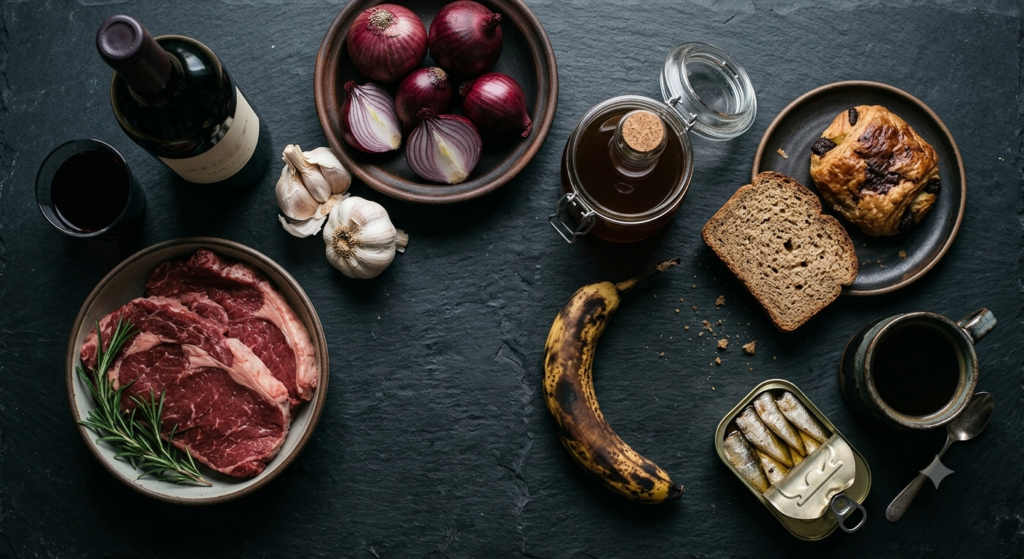
- Alcohol – dulls awareness and clouds judgment
- Meat and animal products – considered heavy and difficult to digest in yogic tradition
- Onion and garlic – believed to overstimulate the senses while also promoting lethargy
- Fermented foods – such as vinegar
- Overripe or underripe produce – fruits and vegetables not eaten at their natural ripeness
- Stale or rotten food – anything left out too long or spoiled
- Baked goods with heavy processing – cakes, pastries, and refined breads
- Microwaved meals – reheating is thought to strip food of its life force, or prana
- Processed, canned, and frozen food – anything preserved chemically or mechanically
- Tobacco and recreational drugs – substances that dull the senses and awareness
How Tamasic Food Affects the Body and Mind
Ayurveda associates a Tamas-heavy diet with several patterns:
- Mental fog and confusion – making it harder to focus, plan, or stay punctual
- Low energy and fatigue – a feeling of being mentally willing but physically unable to move
- Faster aging – attributed to ongoing physical and mental stagnation
- Mood instability – irritability, insecurity, and sudden cravings
- Oversleeping – needing more than eight hours of sleep yet still waking up tired
- Difficulty staying composed – struggling to remain calm and grounded around others
Over time, a diet dominated by Tamasic choices is believed to contribute to chronic fatigue and reduced overall efficiency in daily life.
Are Tamasic Foods Always Bad?
Not entirely. Ayurveda doesn’t frame Tamasic foods as villains to be avoided at all costs — moderation is key. In certain situations, their grounding, dulling quality can actually be useful:
- During intense physical labor, when the body needs heaviness and endurance
- In harsh weather, when extra insulation and grounding support the body
- While healing from illness or pain, when a duller state of the senses allows rest and recovery
The idea isn’t total elimination — it’s balance. A light, mostly Sattvic diet supported by occasional grounding foods can serve different needs at different times.
How to Reduce Tamasic Foods in Your Diet
- Replace processed and canned foods with fresh, seasonal produce.
- Cook meals fresh rather than relying on the microwave.
- Practice mindful eating — slow down and eat until satisfied, not stuffed.
- Gradually reduce alcohol, tobacco, and heavily fermented foods.
- Favor fruits and vegetables picked at the right stage of ripeness.
- Pair dietary changes with a regular yoga and meditation practice to support a calmer, clearer mind.
If you’d like structured guidance on aligning your diet with your yoga practice, explore these training options:
- 200-Hour Yoga Teacher Training in Goa, India
- Advanced Yoga Training Course
- Yoga & Meditation Retreat in Goa
- 100-Hour Holistic Yoga & Sound Therapy Teacher Training
- 10-Day Yoga & Meditation Retreat in Goa
- Emotional Healing Retreat in Goa
You may also want to read: How to Boost Immunity with Yoga
FAQ
Q1. What is a Tamasic food, in simple terms? Tamasic food is any food believed in Ayurveda to promote heaviness, dullness, and low energy — such as stale, overly processed, or overripe/underripe food, along with alcohol, meat, and tobacco.
Q2. What are common examples on a Tamasic foods list? Alcohol, meat, onion, garlic, fermented foods like vinegar, overripe or underripe produce, stale or rotten food, heavily processed baked goods, microwaved meals, canned or frozen food, and tobacco.
Q3. Is eating Tamasic food always harmful? Not necessarily. In moderation, Tamasic qualities can offer grounding and comfort during illness, harsh weather, or physically demanding work. Problems tend to arise when these foods dominate the diet.
Q4. Can how I eat make a food Tamasic, even if the ingredients are healthy? Yes. Overeating, eating mindlessly, or eating food that has gone stale can shift even a nutritious meal into the Tamasic category, according to Ayurvedic thought.
Q5. How can I shift from a Tamasic diet to a Sattvic one? Start by reducing processed, reheated, and preserved foods, eat fresh and seasonal produce, slow down while eating, and pair the changes with regular yoga or meditation practice.
Conclusion
A Tamasic foods list isn’t a rulebook meant to instill guilt — it’s a lens for understanding how the food you choose can shape your energy, mood, and clarity of mind. Ayurveda’s message is simple: what you eat becomes part of who you are. By staying mindful of Tamasic influences and leaning toward fresher, lighter, more intentional choices, you support not just your body but also a calmer, more focused state of mind — one that pairs naturally with a consistent yoga practice.
