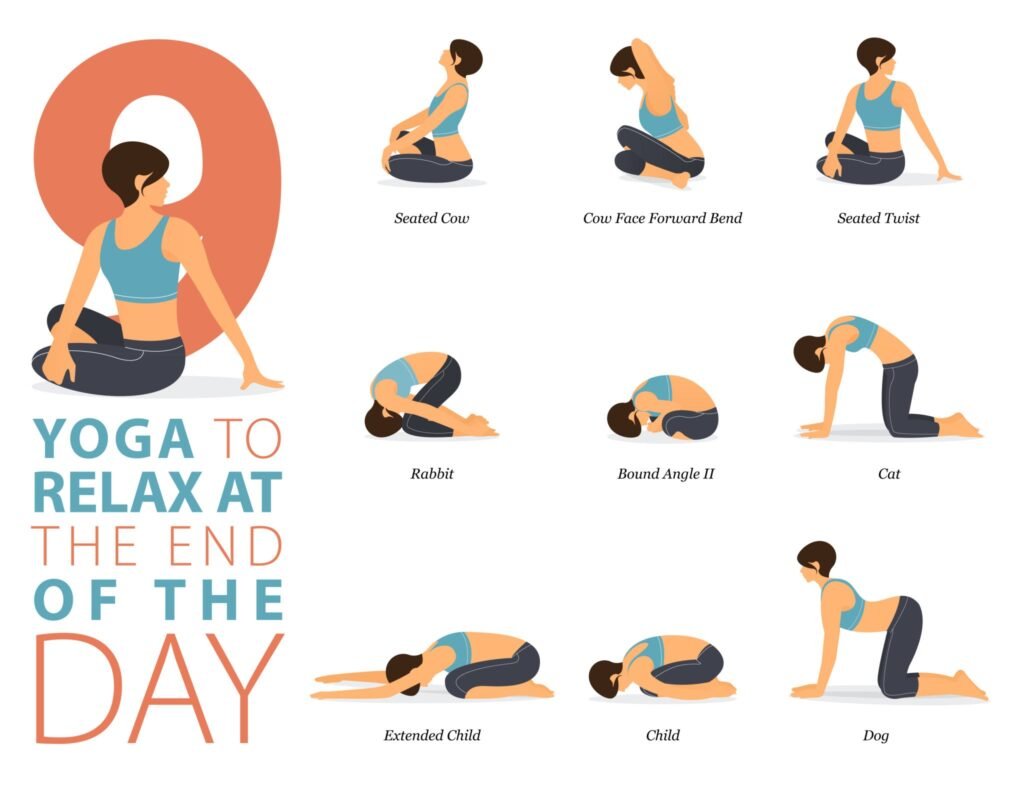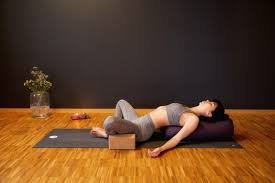
Helping teachers understand which tools fit which nervous system state is particularly important when considering top-down and bottom-up regulation in the classroom.
One of the biggest problems in trauma-informed teaching is being aware of which regulation technique to apply and in what situation. Educators, yoga instructors, therapists, wellness practitioners, and coaches tend to assume that mindfulness and meditation are practices suitable for any occasion. These approaches do not come without their benefits; however, in some cases, these are not the best places to begin the journey toward self-regulation.
For instance, a person experiencing overwhelming sensations, dissociation, anxiety, freezing response, or being emotionally flooded might not find sitting quietly and meditating an easy task. Movement-based techniques might serve as a more accessible option to begin with.
Knowing the difference between top-down and bottom-up regulation and applying them appropriately will enable educators to pick the most appropriate technique depending on their students’ current nervous system states.
In this article, we’ll look more closely into the science behind top-down and bottom-up regulation and explore how trauma impacts the nervous system. We’ll also talk about meditation and movement-based approaches and how to choose between them.
Understanding Trauma and Nervous System States
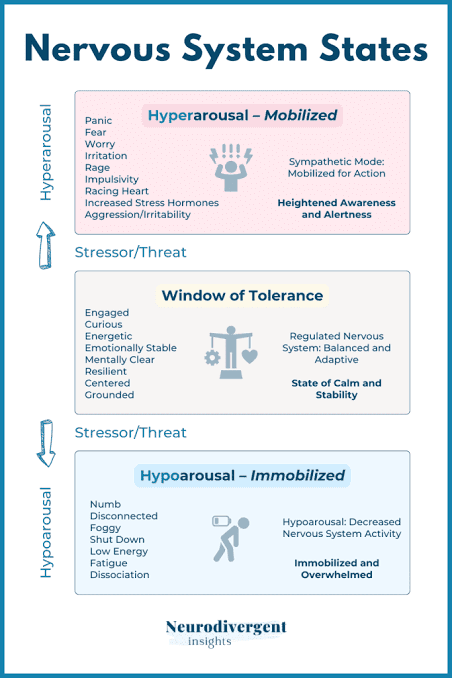
It is not merely the adverse experience; it is the way the body responds to the events that have exceeded one’s coping abilities. Trauma makes the nervous system remain in survival mode long after there is nothing more to fear. The Autonomic Nervous System usually works in a few states:
Ventral Vagal State (Safety and Connection)
This state involves being grounded, relaxed, socially engaged, and in a position to learn and relate to other people. This can be described as the optimum state.
Sympathetic Activation (Fight or Flight)
In response to a threat, the body releases energy. People may notice:
- Anxiety
- Restlessness
- Racing thoughts
- Rapid heartbeat
- Irritability
- Hypervigilance
- Dorsal Vagal Shutdown (Freezing/Collapse)
When the nervous system feels overwhelmed by threat and cannot flee the situation, it may go into shutdown mode. Typical responses are:
- Numbness
- Disconnection
- Fatigue
- Dissociation
- Lack of energy
- Stuckness
Understanding trauma-informed education means realizing that various nervous system responses require different forms of regulation.
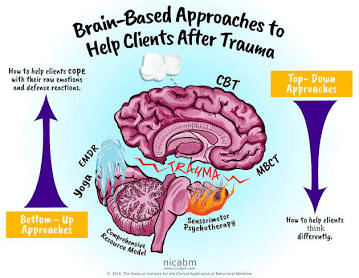
What Is Top-Down Regulation?
Top-down regulation includes techniques where regulation starts with the cognitive parts of the brain, such as the prefrontal cortex. The process involves using awareness, cognitive processes, reflection, and attention to impact emotions and physiological functions.
Techniques include:
- Meditation
- Mindfulness
- Visualization
- Reframing
- Journaling
- Breathwork
- Reflection activities
Top-down regulation helps individuals notice thoughts, regulate emotions, and derive meaning from experiences.
How Top-Down Regulation Works
When a person is reasonably regulated, he/she retains access to the prefrontal cortex. It is responsible for:
- Decision making
- Conscious attention
- Emotional regulation
- Self-awareness
- Problem solving
Regular practice of mindfulness and meditation allows one to develop these skills through conscious observation instead of reacting automatically.
Research shows that regular meditation can lower stress levels, regulate emotions better, and build resilience. For those who feel relatively safe and present in their bodies, meditation is a way to heal.
When Meditation Works Best
Meditation works best for people who:
1. Mildly Activated
A person under moderate levels of stress can benefit from calming down and being mindful.
2. Emotionally Present
The process of meditation necessitates an ability to attend to one’s internal experience without getting caught up in it.
3. Connected to Their Body
People who have an easy time being aware of their body can meditate more effectively.
4. Seeking Greater Self-Awareness
Self-awareness is one thing that meditation does best for someone.
These types of people can benefit greatly from top-down interventions.
When Meditation May Not Be the Best First Choice
One of the greatest misunderstandings about trauma recovery is that people should just sit there in silence and meditate. But for many trauma victims, stillness doesn’t necessarily help; it might even make things worse.
For instance, take an individual who feels:
- Panic attacks
- Dissociation
- Trapped in a situation
- Being overwhelmed with emotion
- High levels of hypervigilance
Meditating and focusing internally won’t help these people since what’s happening inside them is already very uncomfortable. In such cases, the cognitive part of the brain may not be fully available, since it’s busy focusing on self-preservation and survival, rather than contemplation. And that’s when bottom-up regulation becomes especially useful.
What Is Bottom-Up Regulation?
Bottom-up regulation starts at the physiological level and helps regulate emotions and thinking through physical means.
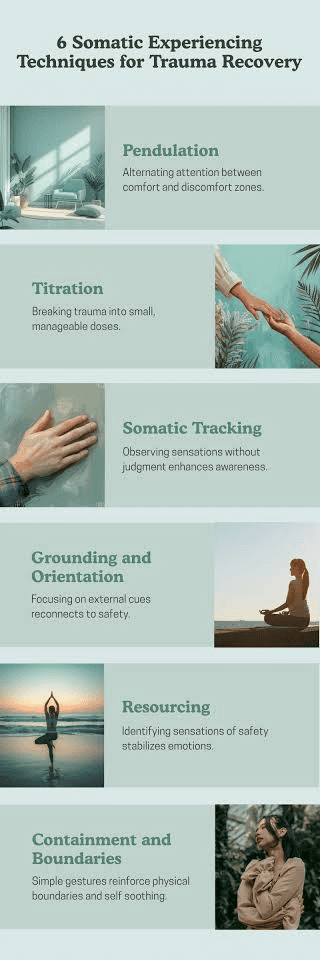
Some techniques include:
- Walking
- Yoga
- Stretching
- Shaking
- Dance
- Somatics
- Grounding
- Rhythmic movement
- Movement-based breathwork
- Bilateral stimulation
Unlike traditional approaches, which aim to change how people think about a situation, bottom-up regulation changes how the body feels.
How Bottom-Up Regulation Works
Unresolved trauma tends to manifest itself as untapped survival energy stuck in the nervous system. Whereas someone feels hyperactive or shut down, it may be hard to apply cognitive techniques, as the nervous system stays activated by the threat response. Exercise can assist in:
- Removing surplus activation
- Increasing bodily awareness
- Restoring the nervous system’s adaptability
- Bringing back a sense of security
- Developing mindfulness and presence
Thus, when physiology changes first, emotions and thoughts tend to regulate themselves afterward.
When Movement Works Best
1. During High Anxiety
Someone dealing with high levels of sympathetic activation is likely to feel more relief through movements rather than stillness.
Activities like walking, stretching, and rhythmic exercises can help in discharging excess energy and calming down.
2. During Dissociation
People stuck in dissociative states of freeze and shutdown typically need mild activation.
Techniques such as:
- In-place marching
- Soft yoga
- Tapping
- Balance training
- Sensory awareness drills
will help them to reconnect with their bodies and environment.
3. When Body Awareness Is Limited
Survivors of trauma sometimes try to tune out their bodily sensations to stay protected.
Physical movements create possibilities for reconnection with one’s own body.
4. When Meditation Feels Unsafe
While being still makes a person anxious, movement can be considered a safer option.
The Window of Tolerance: A Helpful Framework
The term “window of tolerance,” which has been coined by psychiatrist Dr. Dan Siegel, offers an effective way of understanding regulation.
In the window of tolerance,
- One can
- Think clearly
- Learn efficiently
- Connect to others
- Regulate one’s emotions
While outside the window, one may face either
Hyperarousal
- Anxiety
- Panic attacks
- Anger
- Restlessness
- Hypervigilance
Hypoarousal
- Numbness
- Detachment
- Exhaustion
- Dissociation
- Shutdown
The aim of trauma-informed teaching is not perfection but bringing individuals back to their windows of tolerance. Physical activity usually assists individuals in getting into the window from either side of it. On the other hand, meditation works better when individuals have gotten close enough to the window of tolerance.
Choosing the Right Tool for the Nervous System State
Practical Question a Teacher Can Pose:
What is this nervous system asking for now?
If someone appears hyperaroused
Indicators may include:
- Fidgeting
- Talking fast
- Frenzied thinking
- Anxiety
- Agitation
Strategies That May Help:
- Walking meditations
- Yoga practices involving movement at a slow pace
- Rhythmic movement
- Grounding
- Breathing that coordinates with movement
Strategies Less Helpful At First:
- Meditation practices are done silently and sitting motionless for extended periods of time
- Introspection practices
If Someone Appears Hypoaroused
Indicators may include:
- Slumping shoulders and head
- Fatigue
- Numbness emotionally
- Expressionless
- Lack of focus/concentration
Strategies That May Help:
- Movement to generate energy
- Practices that require standing
- Practices that engage the senses
Strategies Less Helpful At First:
- Relaxation exercises involving
If Someone Appears Regulated
Indicators can include:
- Calm involvement
- Emotional presence
- Curiosity
- Stable focus
- Effective techniques include:
- Meditation
- Reflection
- Writing in a journal
- Visualization
- Mindfulness practice
This technique honors the innate intelligence of the body as opposed to forcing an already determined technique.
Integrating Top-Down and Bottom-Up Approaches
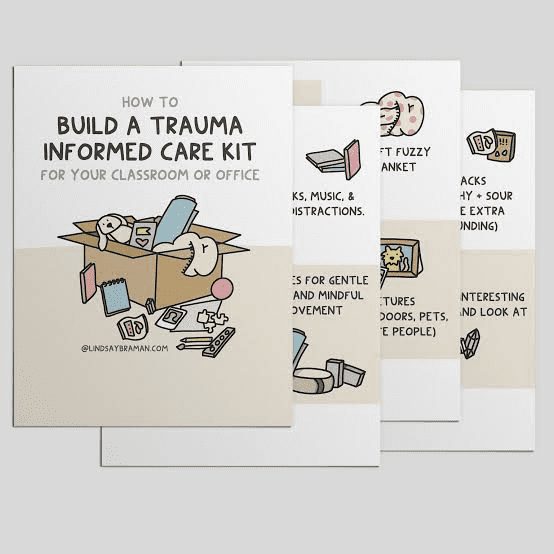
The best trauma-informed interventions do not regard meditation and movement as two opposing techniques. Rather, they view both techniques as fulfilling separate roles in the practice. An example process could include:
- Start with grounding movements.
- Gradually transition into breath awareness.
- Continue with mindful stillness.
- Conclude with reflecting or journal writing.
In this way, the body is allowed to quiet before the mind begins focusing on mindfulness practice. Many trauma-informed yoga practices utilize this process since it mirrors how the nervous system works.
Practical Tips for Teachers
Offer Choice
Choice is a potent remedy for trauma. Encourage engagement rather than insist upon it.
Normalize Different Responses
Regulation does not look the same for everyone. The practices that regulate someone one way can stimulate someone else.
Observe Before Intervening
Notice body position, breathing, energy, and focus before deciding on a regulation strategy.
Start with Safety
Before transformation, there must be safety. Regulation techniques work best when students feel respected and understood.
Be Flexible
The same student who needed movement yesterday might require meditation today. This depends on their nervous system state.
Conclusion
Recognizing the differences between top-down and bottom-up regulation can completely change how teachers facilitate trauma healing practices. While meditation and mindfulness are wonderful techniques, they are not necessarily the best option when working with someone who is dysregulated.
Movement-based strategies can be much easier for people who are anxious, stressed, overwhelmed, or dissociated to use to move back into regulation and presence. Once the client starts feeling more regulated, meditation can assist in the process of gaining awareness, processing, and integrating.
The most important part about these strategies is not choosing either one or another – movement or meditation. Teachers need to recognize what their clients need at the moment, which will lead to better results. A trauma-informed approach understands that healing does not mean forcing someone to sit still and gain insight into the subconscious.
It means meeting a person where they are, facilitating their regulation, and letting their body and mind reconnect.
FAQs
1. Describe the difference between top-down and bottom-up regulation.
Top-down regulation involves the use of cognitive strategies like mindfulness, reflection, and meditation. In contrast, bottom-up regulation starts with movement and sensory experiences that affect physiological and psychological well-being.
2. How could meditation become problematic for trauma survivors?
Mediation usually entails focusing one’s awareness inward, and this could become too much of an experience for people with trauma because of heightened anxiety, panic, or dissociation.
3. Are movement exercises more useful for trauma healing than meditations?
No method works best at all times. Movements could be more helpful when individuals are highly activated or shut down, whereas meditative strategies work better if a person is calm and emotionally available.
4. Can you provide some examples of bottom-up regulation practices?
Walking, yoga, stretching, dancing, shaking exercises, grounding, somatics, and rhythmic movements belong to this category.
5. How will teachers decide on what to do?
Teachers can assess the state of the nervous system and use movement approaches when a person shows signs of activation or shutting down.