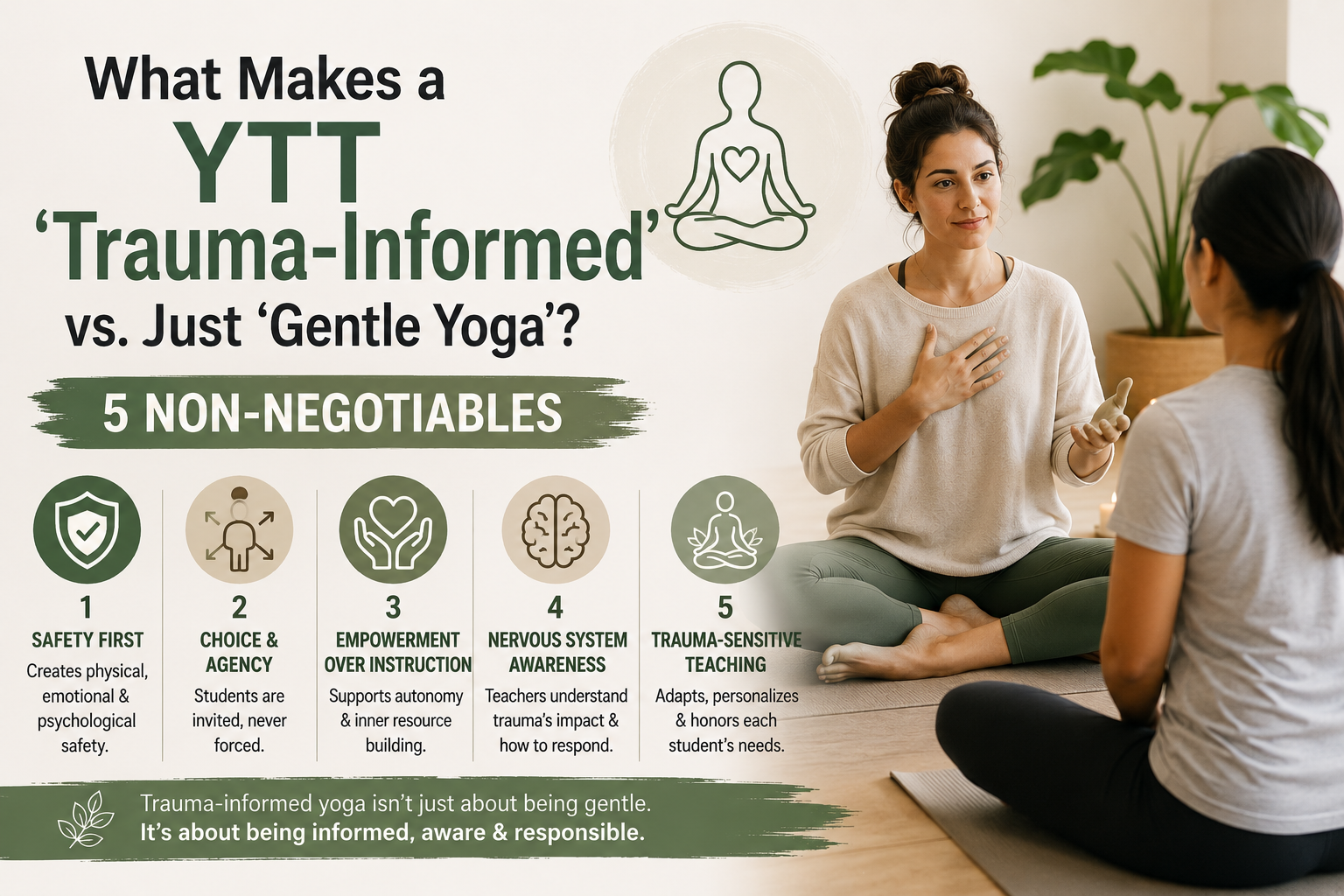
Cutting through the buzzwords for teachers choosing a training is especially important when considering a Trauma-Informed Yoga Teacher Training.
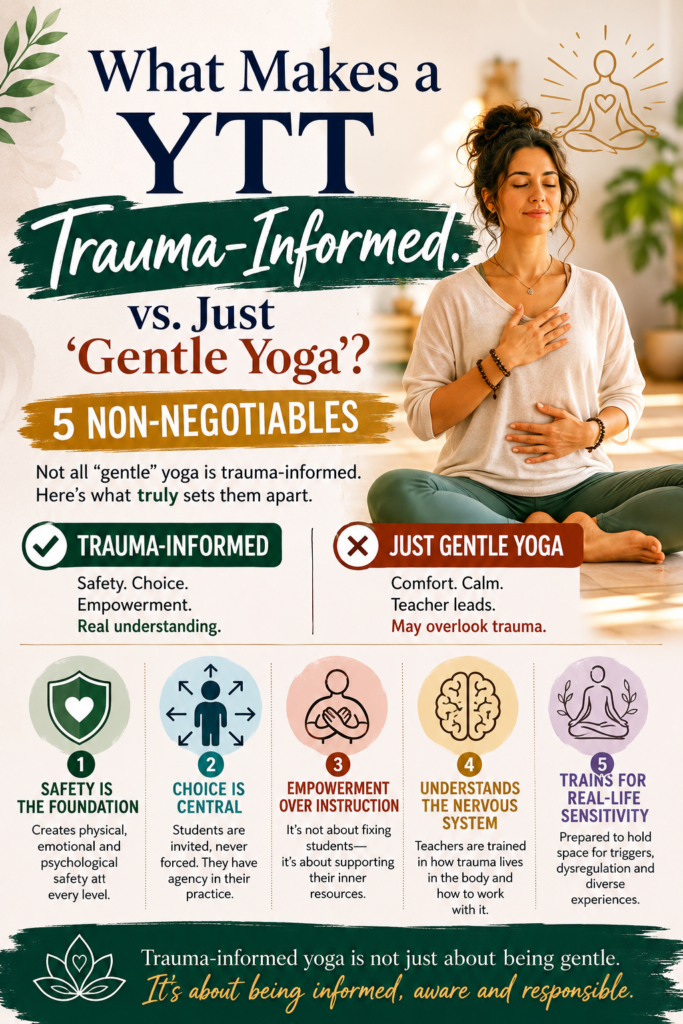
Modern YTTs often utilize terminology such as healing, safe space, nervous system regulation, and trauma-informed. However, just because a class is calm and gentle does not mean that it is trauma-informed. Yoga schools often conflate “gentle yoga” with trauma-informed instruction, which is incorrect, as they differ significantly.
Future yogis need to understand the difference. First, being trauma-informed does not necessarily mean having soft music, slow movements, and relaxation poses only. Being trauma-informed means knowing how trauma impacts the body, brain, emotions, and nervous system and knowing how to apply this knowledge when teaching.
With the rise in awareness about trauma in the wellness community, yoga schools are starting to mark their trainings as “trauma-informed.” Unfortunately, not all programs qualify as such, as they may lack ethical standards and the ability to educate practitioners appropriately.
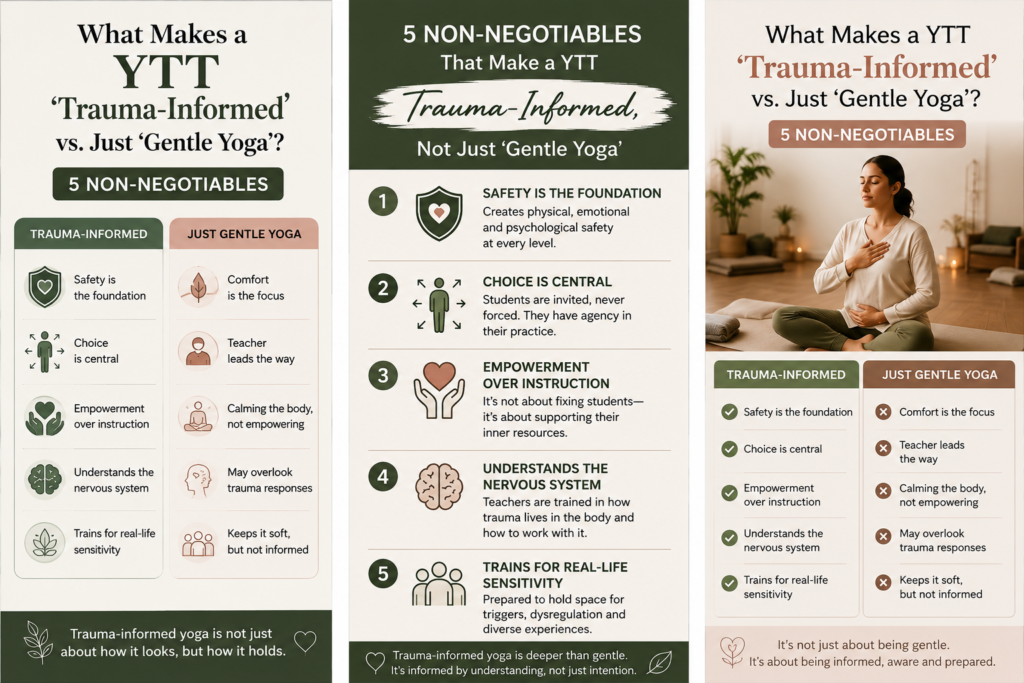
In case you are selecting your yoga teacher training program and would like to determine whether it is genuinely trauma-informed or just another way to brand gentle yoga programs, you should learn more about the five non-negotiable criteria separating genuine Trauma-Informed Yoga Teacher Training from marketing tactics.

Understanding the Difference: Trauma-Informed Yoga vs. Gentle Yoga
The key to understanding the difference is in knowing what constitutes Trauma-Informed Yoga Teacher Training.
What Is Gentle Yoga?
Gentle yoga generally involves:
- Slight body movements
- Relaxation techniques
- Easy postures
- Stress relief
- Restoration
- Awareness of breathing
There is nothing wrong with gentle yoga. It can be quite beneficial for relaxation purposes. Nevertheless, it does not mean that gentle yoga necessarily takes care of potential trauma reactions and triggers.
A class can be gentle but use words, touch, authority, or other teaching practices, making participants uncomfortable.
What Is Trauma-Informed Yoga Teacher Training?
Trauma-informed yoga is an educational method that involves knowledge about the effects of trauma on the nervous system and human behaviors.
This approach is concerned with:
- Emotional and physical safety
- Consent-oriented education
- Student self-determination
- Predictability and clarity
- Nervous system literacy
- Non-coercive language
- Empowerment, not control
A trauma-informed educator recognizes that trauma may influence one’s perception of movement, touch, breath, stillness, authority, and even closed-eye meditation.
The idea is not to “heal” the trauma through the practice of yoga but rather to provide a space where individuals are valued, honored, and empowered.

Why Trauma-Informed Yoga Teacher Training Matters More Than Ever
Contemporary yoga classes consist of a diversity of people with varied backgrounds. These people come with their own histories involving:
- Chronic stress
- Anxiety
- PTSD
- Grief
- Abuse
- Medical trauma
- Burnout
- Loss
- Discrimination
- Disruptions to nervous system functioning
Conversations surrounding mental health and trauma have also led to an awareness of the presence of trauma in the body. Since yoga requires both the body and breath to be engaged, training programs for yoga instructors must go beyond anatomy and alignment cues.
Without trauma awareness, even the best intentions of a teacher can lead to uncomfortable situations.
It is, therefore, important for a trauma-informed YTT to become mandatory.

1. Consent Is Practiced, Not Assumed
The first non-negotiable of a trauma-informed YTT is an intense focus on consent.
In the world of typical yoga classes, physical manipulation happens all the time. Teachers will help students get into poses without asking, and sometimes will just assume that everyone is okay with being touched. The idea of a trauma-informed class goes completely against this kind of attitude.
What Trauma-Informed Trainings Teach
When teachers receive trauma-informed yoga teacher training, they are taught to:
- Ask for consent before touching
- Take “no” seriously
- Provide other options besides hands-on assists
- Start with verbal cues only
- Refrain from using pressure or force
- Be knowledgeable about personal space
However, consent doesn’t apply exclusively to physical interactions.
Coercive language such as the following is avoided:
- “Go further.”
- “Don’t give up.”
- “Get past any discomfort you’re feeling.”
- “This is supposed to be how it feels.”
Instead, inviting language is used, which looks more like this:
- “Should you want to…”
- “Perhaps consider…”
- “What could feel good for you?”
This helps give students control back.
Red Flag to Watch For
Whereas a trauma-informed YTT will always provide opportunities for choice, any insistence on mandatory hands-on adjusting or “correction” is a massive red flag.
2. The Nervous System Is Central to the Training
In a trauma-informed training, you do not just focus on the poses. You get an understanding of how your nervous system reacts to the threat or stress.
It might be among the most significant distinctions between trauma-informed education and a simple, gentle yoga course.
What You Should Learn
- Education That Should Be Provided to a Teacher
- Some of the aspects you should be educated about in your YTT include:
- Fight, flight, freeze, and fawn response
- Polyvagal theory fundamentals
The way your body works under stress
- Emotional regulation
- Window of tolerance
- Various grounding techniques
- Proper breathwork
You also understand that certain practices may not necessarily calm every single individual.
Examples Include:
- Deep breath retention might lead to anxiety
- Closing the eyes feels uncomfortable
- Silent meditation becomes overwhelming
- Backbend poses trigger emotional response
Instead of taking a rigid approach to calming your students, you give options.
Why This Matters
Knowing what makes the nervous system react enables you to stop labeling your students as unmotivated or difficult.
3. Safety Is Prioritized Over Performance
Conventional yoga cultures tend to encourage accomplishment, flexibility, self-discipline, or “pushing through.” With trauma-sensitive yoga, the emphasis changes entirely.
Safety – not performance – becomes the new priority.
Characteristics of a Trauma-Sensitive Teaching Approach
Educators are instructed to:
- Prioritize body consciousness over perfect form
- Emphasize rest and breaks
- Relieve the pressure to achieve
- Avoid competitiveness
- Provide a predictable class structure
- Provide clear transition instructions
- Abolish shameful instruction techniques
The message to the students is always that choosing to participate in class activities is not compulsory.
This is significant because many trauma survivors suffer from hypervigilance, perfectionism, people pleasing, or a fear of failure. An atmosphere focused on performance would likely make such issues worse.
Gentle Does Not Always Mean Safe
The yoga class might be gentle physically, but emotionally threatening if participants feel judged, stressed, or controlled.
It is understood that trauma-sensitive teachers must consider both aspects.
4. The Training Includes Ethical and Inclusive Language
Words are critical in a trauma-informed environment.
The fourth principle is being mindful of the language used.
Trauma-informed YTT classes will train future teachers on how they impact students emotionally and psychologically through their language.
Inclusive Teaching Matters Too
For instance, in contrast to commanding language:
- “Do it now.”
- “Relax.”
- “Don’t think.”
- “Your body needs to look like this.”
The teachers will learn to use affirming language:
- “Noticing what you’re noticing.”
- “You are free to modify.”
- “Taking the one that serves you.”
- “You have permission to stop at any time.”
Inclusive Teaching Matters Too
Diversity of bodies and backgrounds must be considered in trauma-informed programs.
This entails considering the following:
- Body-image issues
- Gender sensitivity
- Accessibility concerns
- Cultural competency
- Triggers and trauma experiences
- Chronic pain
- Disabilities
Future teachers are trained not to make assumptions about their students’ physical ability, identity, or experiences.
Red Flag to Watch For
Training that utilizes spirituality bypasses language, including the following phrases:
- “Positive vibes only”
- “Release your negativity.”
- “Everything happens for a reason.”
They may unintentionally dismiss someone’s experience with emotional pain or trauma.
5. Teachers Are Taught Scope of Practice and Humility
One of the key areas that can get overlooked when learning about trauma-informed education is the importance of professional boundaries.
The yoga instructor is not the therapist unless she/he has other qualifications for being one.
The trauma-informed YTT must include all this information.
What Ethical Trainings Emphasize
What the teacher learns is:
- No diagnosing of trauma
- No forcing emotional release
- No guarantees that they are healed
- How to refer the person to a specialist
- How to set up healthy boundaries
- How not to have a savior complex
Why? Because yoga classes may make instructors feel they have some healing power, even if they lack qualifications to do so. A trauma-informed yoga teacher will know yoga can be used to improve wellbeing, but cannot replace any therapy.
Humility Is a Core Principle
True trauma-informed teachers know that there is always more to learn.
Rather than promising to “heal” their clients, they aim to build spaces for healing and reconnection, spaces where students can reclaim their power and autonomy.
Questions to ask before joining a program include:
Questions to Ask Before Joining a Trauma-Informed Yoga Teacher Training?
- Who instructs the trauma-informed aspect?
- Is nervous system education part of the program?
- What about consent education?
- Are hands-on assists optional?
- Do they address issues of trauma ethics?
- What about inclusive language?
- Are mental health practitioners involved in developing the program’s curriculum?
Final Thoughts on Trauma-Informed Yoga Teacher Training?
The wellness sector frequently converts profound principles into trends. “Trauma-informed” is just the latest trend, but a real trauma-informed yoga education encompasses much more than gentle stretches or relaxation sessions.
A real trauma-informed YTT prepares future teachers to build their practices around safety, consent, nervous system considerations, ethics, and empowerment of their students.
This approach acknowledges that each person entering your class comes with their past, history, and experiences.
For those picking a YTT program, these five factors will help them distinguish between a legitimate course of study and trend-driven branding. Top-notch trauma-informed trainings aren’t attempting to create flawless teachers.
They seek to empower educators to be more mindful, empathic, accountable, and responsive individuals. And, ultimately, mindfulness will revolutionize not only your practice—but the yoga teacher profession as a whole.
FAQs
1. Is trauma-informed yoga solely for people with PTSD?
Not at all. Trauma-informed yoga helps all participants because it fosters safer, more respectful, and more accessible environments to learn yoga. Trauma-informed yoga is beneficial for those living with PTSD and trauma experiences, but even those without trauma histories can benefit from the teachings of consensual practices.
2. Is there such a thing as a trauma-informed gentle class?
Yes, but only if there is an intention on the part of the instructor to engage in trauma-informed practices such as informed consent and nervous system regulation.
3. Must a yoga teacher have psychotherapy credentials to instruct in trauma-informed yoga?
Absolutely not! A trauma-informed yoga teacher understands her/his scope of practice and does not diagnose or treat mental illnesses.
4. Is it possible to make hands-on adjustments in trauma-informed yoga?
It is possible as long as there is informed and continuous consent from the client. Most trauma-informed instructors would rely on either verbal cueing or optional assistance to maintain client sovereignty.
5. How can I find out whether my YTT program is trauma-informed?
The curriculum should include nervous system awareness, consensual practice, professional conduct, accessible teaching, and compassionate communication. Beware of any YTT program that simply claims to be trauma-informed without detailing its curriculum.