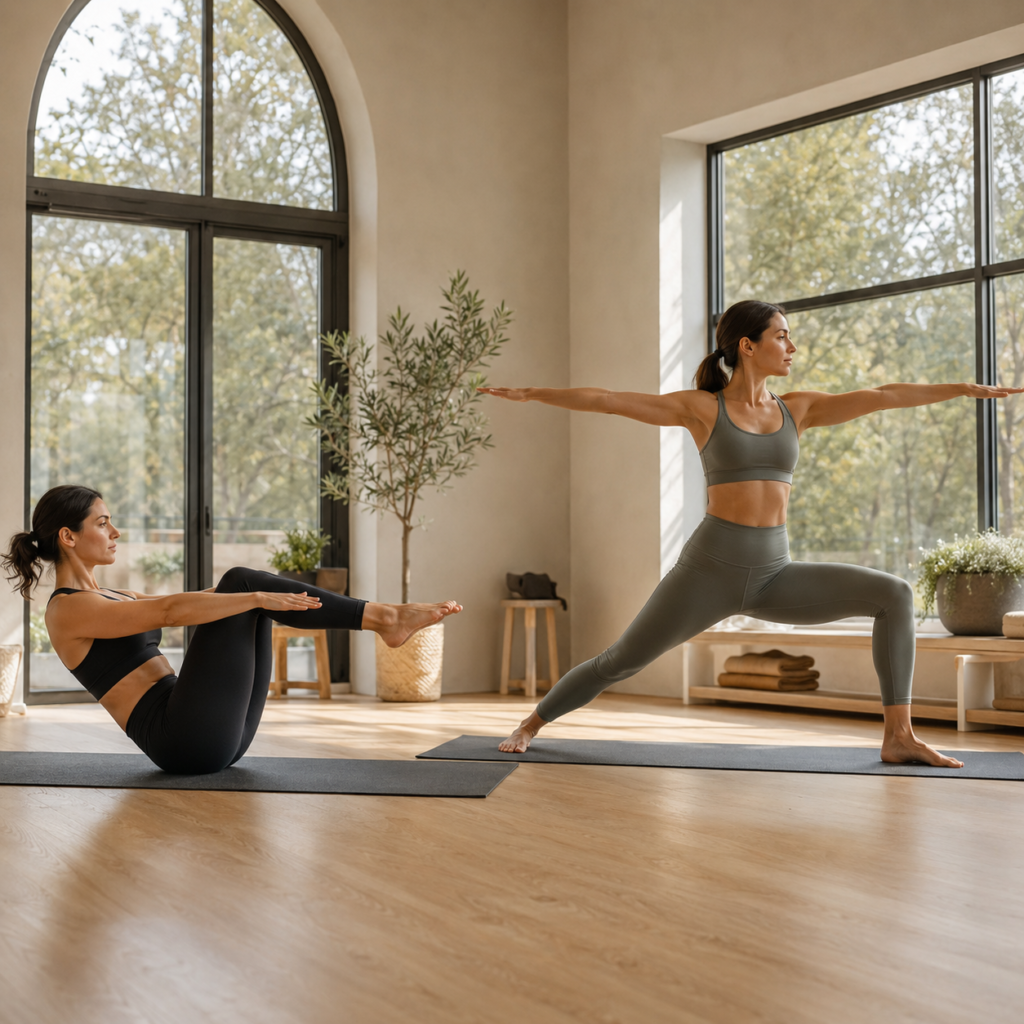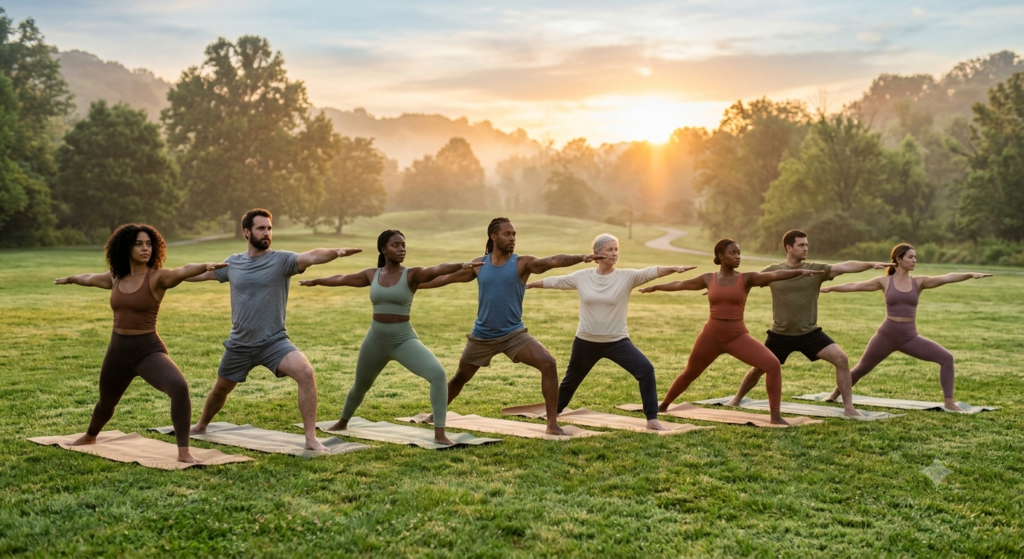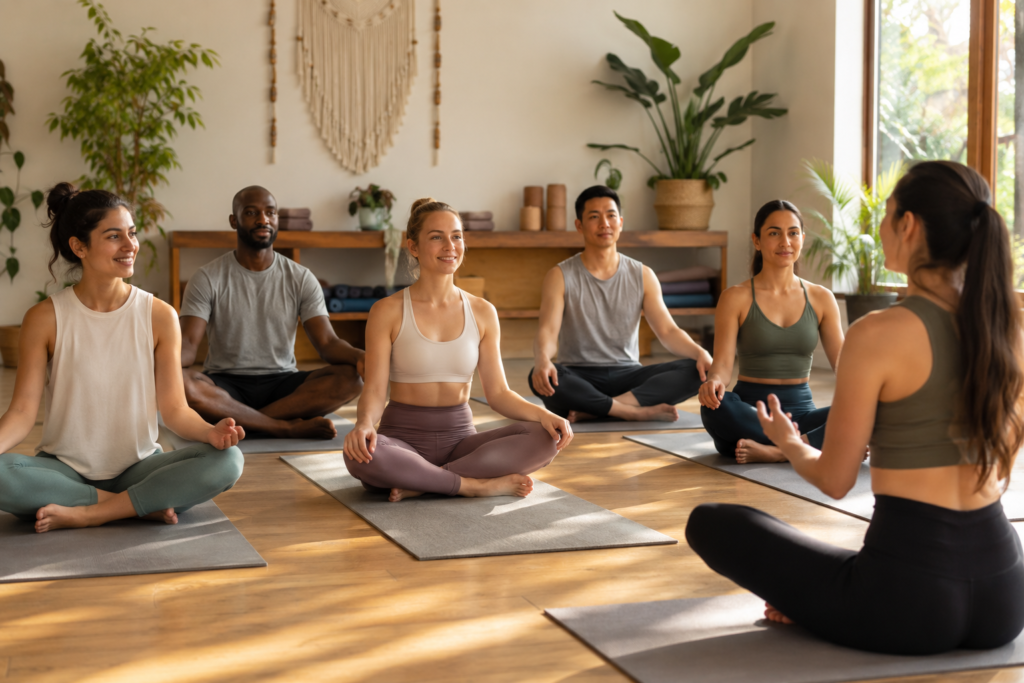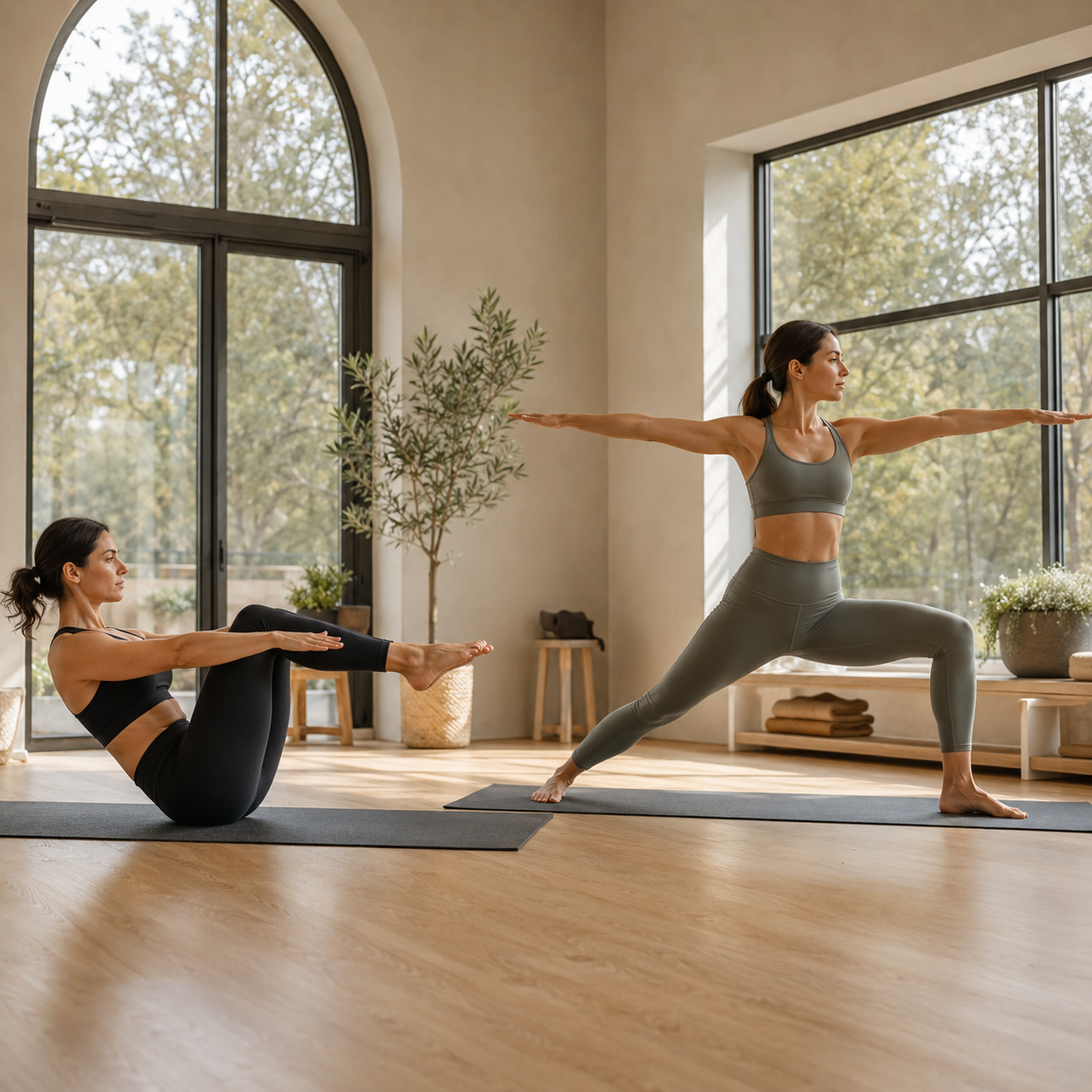
You stand in front of the gym timetable, and the two classes look almost the same. Mats on the floor. Calm instructors. People breathing deeply. So what’s the actual difference between Pilates and yoga, and how do you know which one you need?
Yoga is a mind-body practice that started in ancient India. It combines physical postures with breathwork and meditation, and the goal is flexibility and inner calm as much as physical fitness. Pilates is a modern conditioning system, created in the early 1900s, built almost entirely around controlled, core-focused movement to build strength and fix posture.
Both are genuinely good for you. Neither one wins across the board. The right choice depends on what your body needs right now, not on which class looks more Instagram friendly. This guide walks through the real differences so you can pick with confidence.
Also read: Yoga for Beginners: The Complete Guide to Starting Your Practice
What Is Yoga?
Yoga is thousands of years old, and the physical postures (asanas) are only one part of it. A full practice also includes pranayama (breath control), meditation, and a set of ethical principles that guide how a practitioner lives, not just how they stretch.
There isn’t just one style of yoga. A few of the most common ones:
Hatha Yoga. Slower paced, foundational postures. The easiest place for most beginners to start.
Ashtanga Yoga. A set, physically demanding sequence, practiced with breath linked to every movement.
Vinyasa Yoga. Flowing movement, one breath per transition, faster paced than Hatha.
Yin Yoga. Poses held for several minutes at a time. Targets connective tissue and calms the nervous system.
Restorative Yoga. Fully supported, deeply relaxing poses aimed almost entirely at stress relief.
Every style still comes back to the same idea: breath, movement, and awareness working together, not separately.
What Is Pilates?
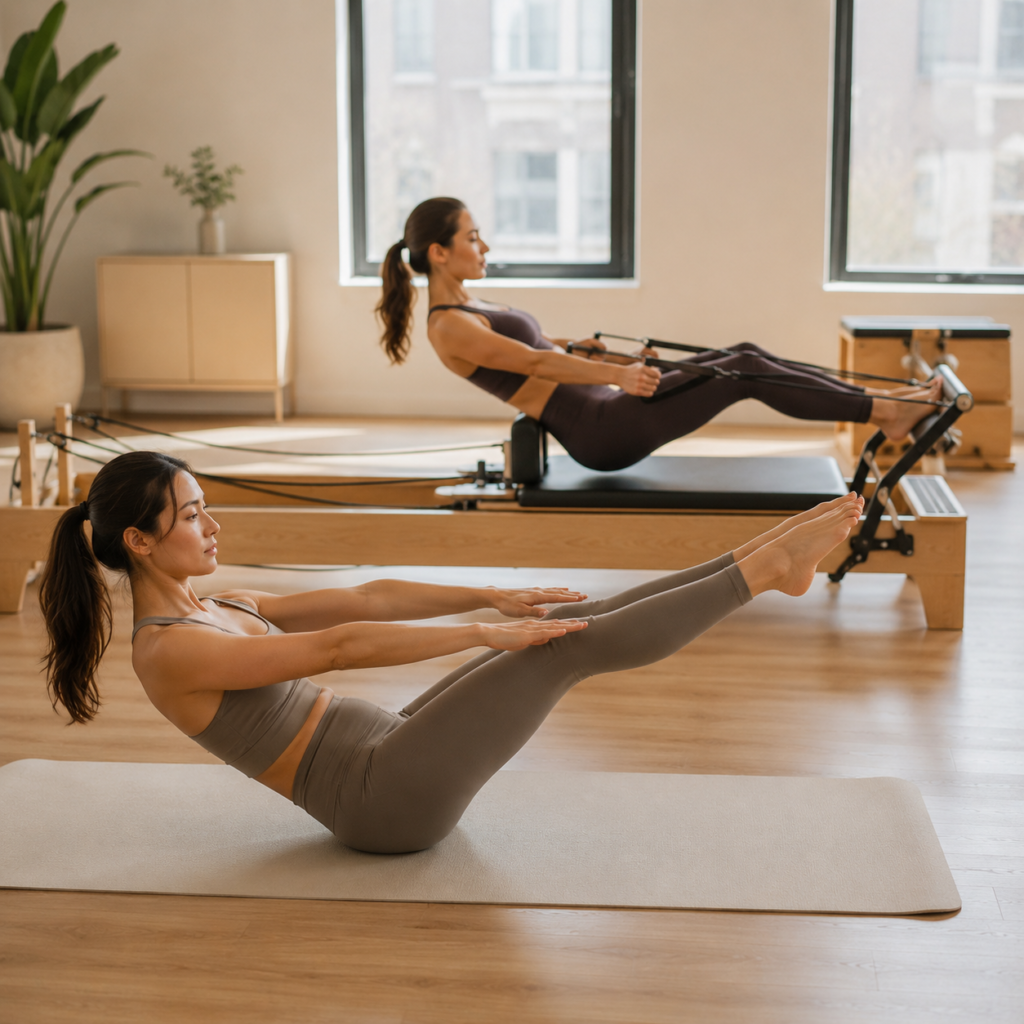
Joseph Pilates developed this method in the early 20th century, originally to rehabilitate injured soldiers during World War I. Dancers later picked it up because it rebuilt strength and alignment without adding bulk or straining the joints. Pilates himself called it “Contrology,” and the name says a lot about what it actually is: total control over small, deliberate movements, centered on the deep core (the abdominals, lower back, hips, and glutes, often nicknamed the “powerhouse”).
Pilates comes in two main formats:
Mat Pilates. Bodyweight exercises done on a mat. Easy to start at home or in a studio.
Reformer Pilates. Done on a spring-loaded machine that adds resistance and support for more targeted work.
Pilates has no spiritual or philosophical layer attached to it. It’s a structured, anatomy-driven system, and that’s exactly why physiotherapists lean on it so often.
Pilates vs Yoga: Quick Comparison Table
| Factor | Yoga | Pilates |
| Origin | Ancient India, 5,000+ years old | Germany, early 1900s (Joseph Pilates) |
| Main focus | Flexibility, breath, mind body connection | Core strength, posture, controlled movement |
| Philosophy | Includes meditation, breathwork, ethics | Purely a physical conditioning system |
| Movement style | Poses held or flowed between, breath led | Small, controlled, repeated movements |
| Equipment | Just a mat, props optional | Mat, or a Reformer machine for resistance |
| Best known for | Flexibility, stress relief, calm | Core strength, posture, injury rehab |
| Calories per hour (average) | 200 to 540, depending on style | 150 to 375, depending on intensity |
| Good for beginners | Yes, especially Hatha | Yes, especially mat Pilates |
Is Pilates or Yoga Better for Weight Loss?
Neither one is a high calorie burner on its own, so this question needs a real number, not just a guess.
According to the American Council on Exercise, a beginner mat Pilates class burns roughly 108 calories in 30 minutes, and an advanced class can reach around 168 calories in the same time. A restorative or Yin yoga class sits at the low end too, usually under 200 calories an hour. A faster style like Vinyasa or Power Yoga can burn 300 to 540 calories an hour, since the heart rate stays elevated through continuous movement.
So if calorie burn is your only metric, a vigorous yoga flow generally beats a mat Pilates class. Reformer Pilates with added intervals can close that gap and sometimes match it. But neither practice replaces dedicated cardio for fat loss. Most trainers recommend using yoga or Pilates to build the habit and the strength foundation, then pairing it with 150 to 300 minutes of weekly moderate cardio, which is the general activity guideline for adults.
Which Is Better for Back Pain, Yoga or Pilates?
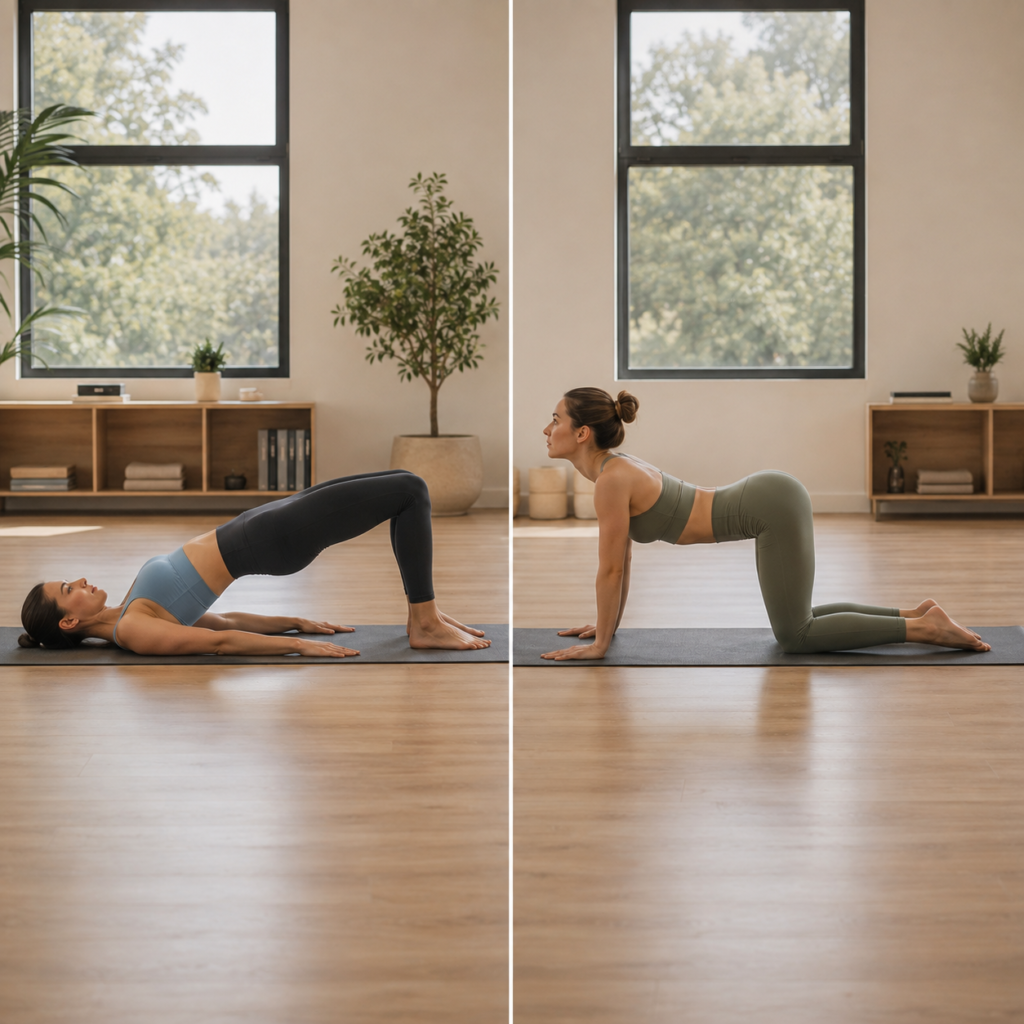
Pilates usually gets recommended first for back pain, and there’s a reason for that. It was built as a rehabilitation method, so nearly every movement strengthens the deep core and trains spinal alignment directly. A review of 23 clinical studies found that the majority showed real reductions in pain and disability from Pilates, across conditions including chronic back pain, neck pain, and scoliosis.
Gentle yoga helps too, just through a different mechanism. Hatha and Yin styles lengthen tight muscles around the spine and hips, which eases the kind of back tension that comes from sitting all day. A lot of physiotherapists actually recommend both together: Pilates for stability, yoga for mobility.
Does Yoga or Pilates Build More Flexibility?
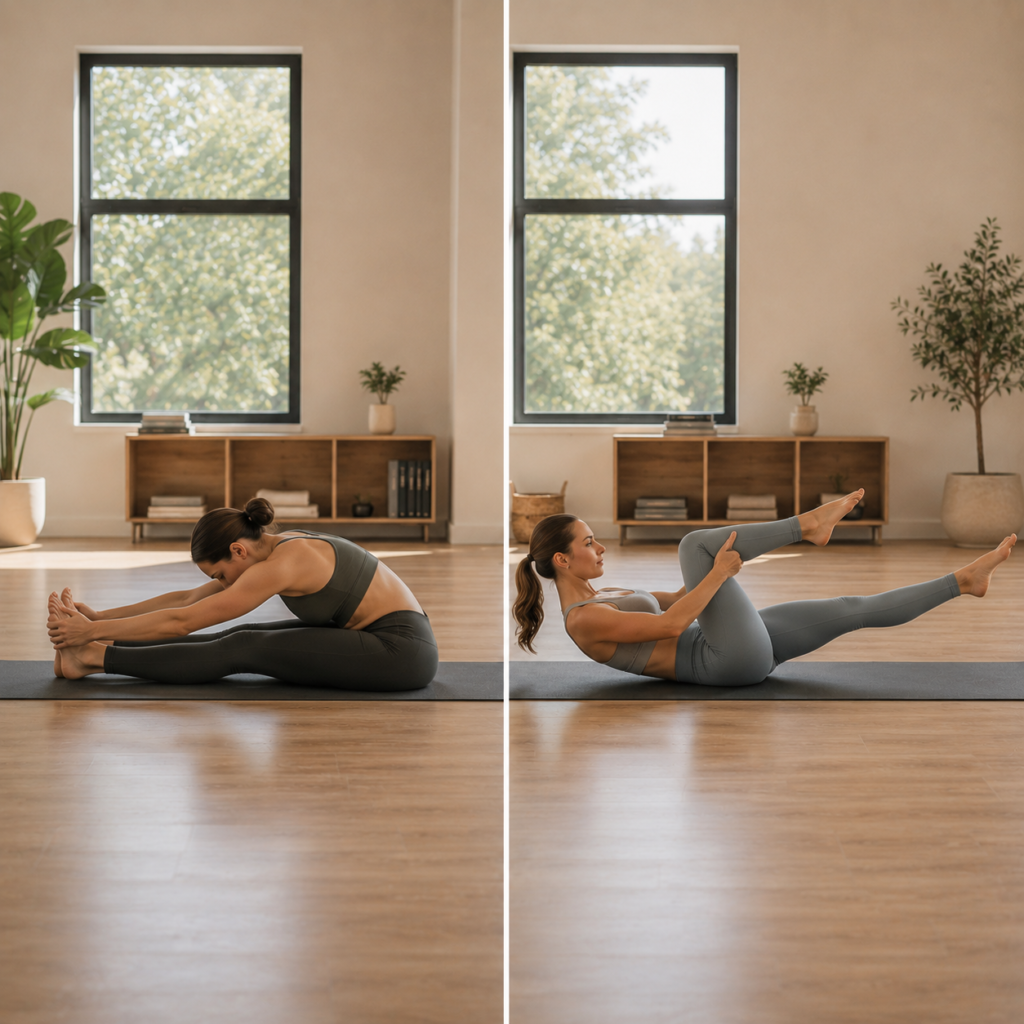
Yoga wins this one clearly. Holding and moving through poses, especially in Yin Yoga where a single pose can be held for three to five minutes, systematically improves range of motion through the hips, spine, hamstrings, and shoulders. Pilates does improve flexibility as a side effect of controlled movement, but it was never designed to be the main goal.
Which Helps More With Stress, Yoga or Pilates?
Yoga has the edge here too, mainly because breathwork and meditation are built directly into the practice, not tacked on. Slow, conscious breathing activates the body’s relaxation response, which is why so many students walk out of a single class feeling noticeably calmer. A 2017 study found that a month of daily yoga practice lowered participants’ blood pressure, a solid marker of reduced stress on the body.
Pilates still lowers stress, mostly through the focus it demands. When you’re concentrating on precise, controlled movement, your mind doesn’t have much room left to spiral. It’s a real benefit, just a different pathway to get there.
Which Builds More Core Strength, Pilates or Yoga?
Pilates was built for exactly this. Almost every single movement in a Pilates class engages the deep core in a targeted, deliberate way, which is part of why it’s one of the most efficient methods for building core stability. Yoga strengthens the core too, especially through standing poses and arm balances, but it trains the core as part of a whole-body pattern rather than isolating it the way Pilates does.
Is Pilates or Yoga Better for Beginners?
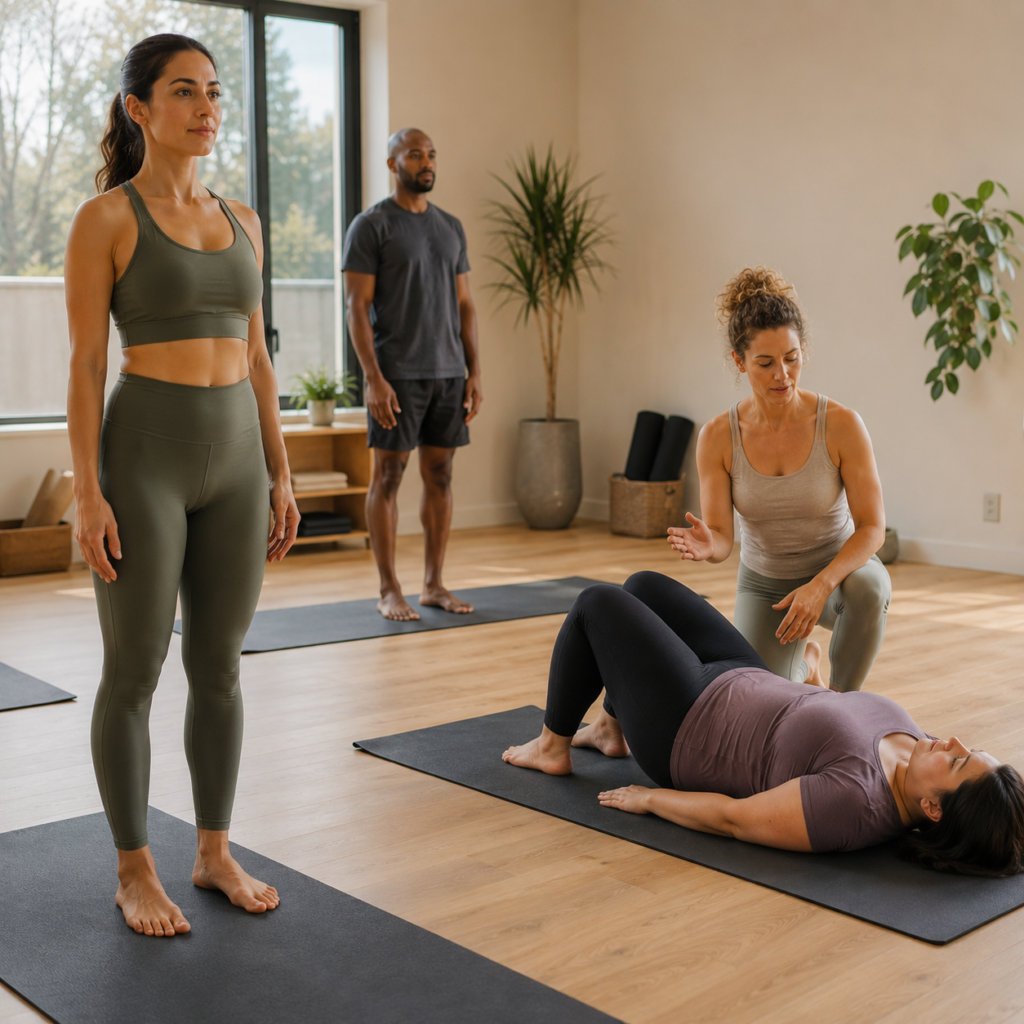
Both work well for beginners, as long as you start with the right level. A basic Hatha yoga class and an introductory mat Pilates session are both designed to ease you in without overwhelming you on day one.
If you’re recovering from an injury or want better posture first, start with Pilates. If stress relief, flexibility, or a deeper mind-body practice is the goal, start with yoga.
What Do Pilates and Yoga Have in Common?
- Even though they came from completely different places, the overlap is bigger than most people expect:
- Both are low impact and easy on the joints.
- Both use your own body weight as the main form of resistance.
- Both put real emphasis on controlled breathing during movement.
- Both improve balance, coordination, and body awareness over time.
- Both can be practiced at home or in a studio with almost no equipment.
- Both are commonly recommended by physiotherapists for injury prevention.
Because of that overlap, a lot of people don’t pick one and stick with it forever. They use Pilates to build strength and stability, and yoga to add flexibility, breath control, and a sense of calm the body doesn’t get from strength training alone.
Can You Do Both Pilates and Yoga in the Same Week?
Yes, and honestly, this combination tends to work better than picking a side. A common split is two to three Pilates sessions a week for core strength and stability, paired with two to three yoga sessions for flexibility and recovery. There’s no rule that says you have to commit to one. The two practices work well together precisely because they train the body from different angles.
You Don’t Have to Choose Just One
Pilates and yoga aren’t really competing with each other. They’re two different tools for two different jobs. Want a stronger, more stable core and better posture? Pilates gets you there with precision. Want flexibility, stress relief, and a practice that trains your mind along with your body? That’s yoga’s territory.
For most people, the real question isn’t Pilates versus yoga. It’s figuring out what your body actually needs right now and letting that decide for you.
If yoga is pulling you toward something deeper than a weekly class, Oceanic Yoga in Goa, India offers Yoga Alliance certified training for practitioners at every stage. Our200-Hour Yoga Teacher Training builds a strong foundation in asanas, breathwork, philosophy, and teaching methodology. Our 300-Hour Advanced Yoga Teacher Training goes further into advanced practice and applied anatomy. And if stillness and healing appeal to you more than movement, ourYin Yoga and Sound Healing TTC blends slow, restorative yoga with the therapeutic effects of sound.
Set on a quiet hillock just 800 meters from the beach in Morjim, Goa, Oceanic Yoga has trained students from over 60 countries since 2007. Whether you’re brand new to yoga or ready to teach it, explore our courses and find the path that fits where you are right now.
FAQs
1. Is Pilates or yoga better for beginners?
Both are beginner friendly. Pick Pilates if your main goal is core strength and posture. Pick yoga if you want flexibility, stress relief, or a mind-body practice from day one.
2. Does Pilates count as yoga?
No. They’re separate disciplines with different origins and goals. Pilates is a Western conditioning method built in the 1900s. Yoga is an ancient Indian practice where physical postures are just one part of a much larger system that includes breath and meditation.
3. Which burns more calories, Pilates or yoga?
A vigorous yoga style like Vinyasa or Power Yoga typically burns more calories per hour (up to 540) than a standard mat Pilates class (150 to 250). Reformer Pilates with added cardio intervals can come close to matching it.
4. Can Pilates and yoga be done on the same day?
Yes. Many practitioners pair a Pilates session for strength with a yoga session for flexibility and recovery, either back to back or on alternating days.
5. Is yoga or Pilates better for lower back pain?
Pilates is usually recommended first because of its strong core and spinal alignment focus. Gentle yoga styles like Hatha or Yin also relieve back tension by improving flexibility. Combining both is common in rehab settings.
6. Do I need equipment to start Pilates or yoga?
No. Mat based Pilates and most yoga styles only need a mat. Reformer Pilates uses a specialized machine, but it isn’t required to get started.