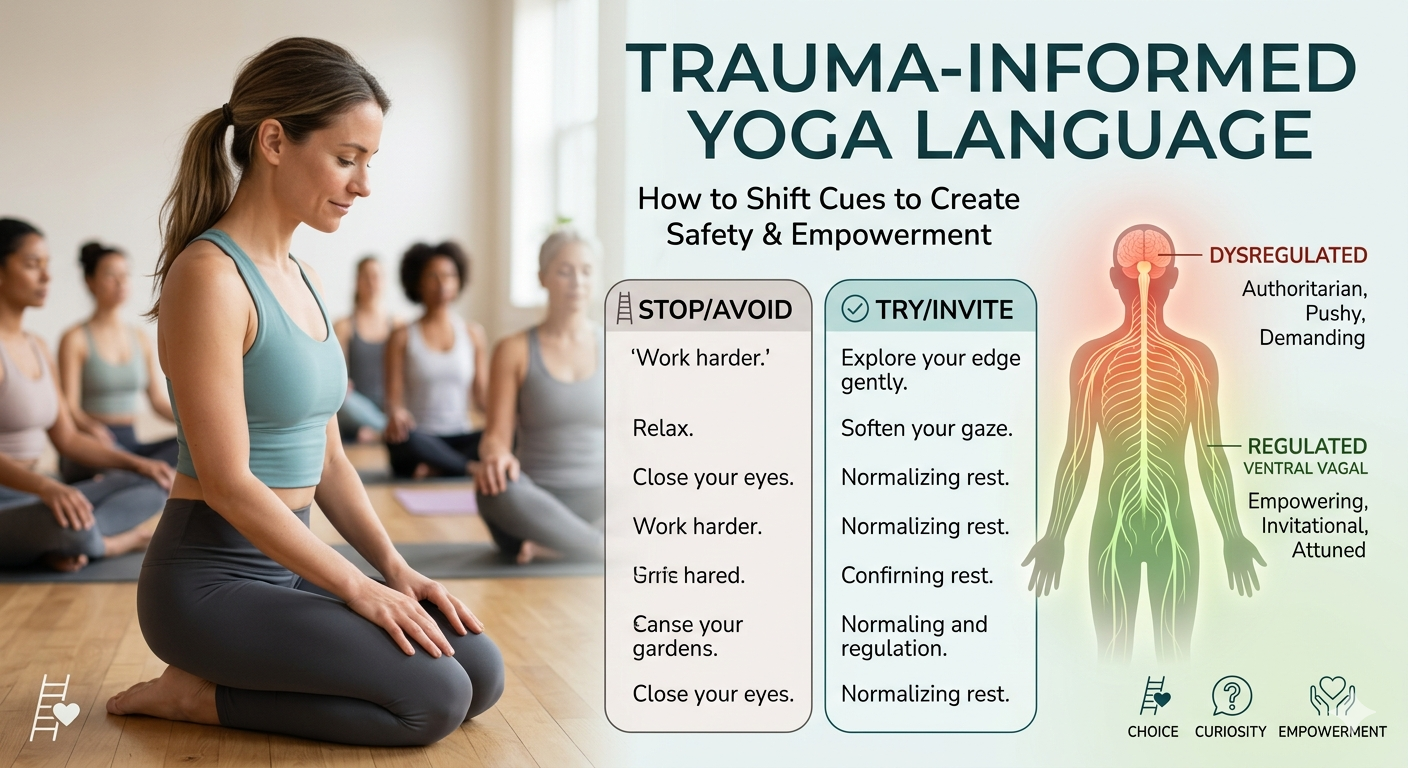
How Specific Words Impact the Nervous System and What to Say Instead
Yoga is known as a healing process – one that settles the nervous system, allows individuals to reconnect with their bodies, and achieves emotional harmony. However, to truly support students, yoga teachers can benefit from learning trauma informed yoga cues, as most yoga practitioners unintentionally employ words that can cause anxiety, disconnection, pressure, or even fear in their students.
Words that seem motivational to one person might seem controlling or trigger someone else’s anxiety.
With an increasing emphasis on trauma-informed yoga practices, most practitioners have started recognizing that their words matter as much as their teaching methods. Our nervous systems are always searching for signs of security or danger. Simple statements like push further, don’t give up, or close your eyes can induce a stress response in individuals who have experienced trauma, have anxiety, suffer from constant stress, or struggle with body image issues.
Trauma-sensitive yoga is not about tiptoeing around students or never using any intense language. It is about using language deliberately, with care and respect, so that the students feel empowered instead of controlled.
In this guide, you will learn about how yoga cue words impact the nervous system, how language plays a role in trauma-sensitive yoga instruction, and alternative words that your yoga instructor can use instead.
Understanding the Nervous System in Yoga Spaces
The nervous system continuously assesses the environment to determine if it is safe, neutral, or threatening. This happens automatically and without conscious awareness.
In the case of stressed, traumatized, grieving, burnt out, or emotionally overwhelmed students, certain stimuli may inadvertently trigger their nervous systems into threat mode or feeling like there is no control.
When the nervous system perceives a threat, students might notice:
- Tense muscles
- Fast shallow breaths
- Dissociation
- Anxiety
- Emotional shutdown
- Over-awareness
- Freezing up
- Panic sensations
It is ironic how some of these can happen in environments created explicitly for restoration.
Trauma-informed yoga cues acknowledge that each individual comes from their own unique background. Some might feel safe in stillness, but others may be threatened by silence. Some might prefer hands-on manipulation, while others will feel unsafe with touch.
Language becomes one of the most potent instruments for establishing nervous-system safety.
Why Traditional Yoga Cueing Can Sometimes Be Harmful
For many instructors, training happened in contexts where discipline, perfection, intensity, or obedience were valued. The old-style way of teaching had phrases like:
- Work harder.
- No pain, no gain.
- You should be feeling this.
- Relax.
- Shut your eyes.
- Keep holding this position.
- Don’t stop.
These phrases sound benign enough, but can create a sense of pressure, embarrassment, or isolation. Teaching through trauma-sensitive methods moves away from an authoritarian approach and into a more cooperative one. This is not about controlling people’s bodies.
This is about helping people connect back to their own sense of bodily awareness.
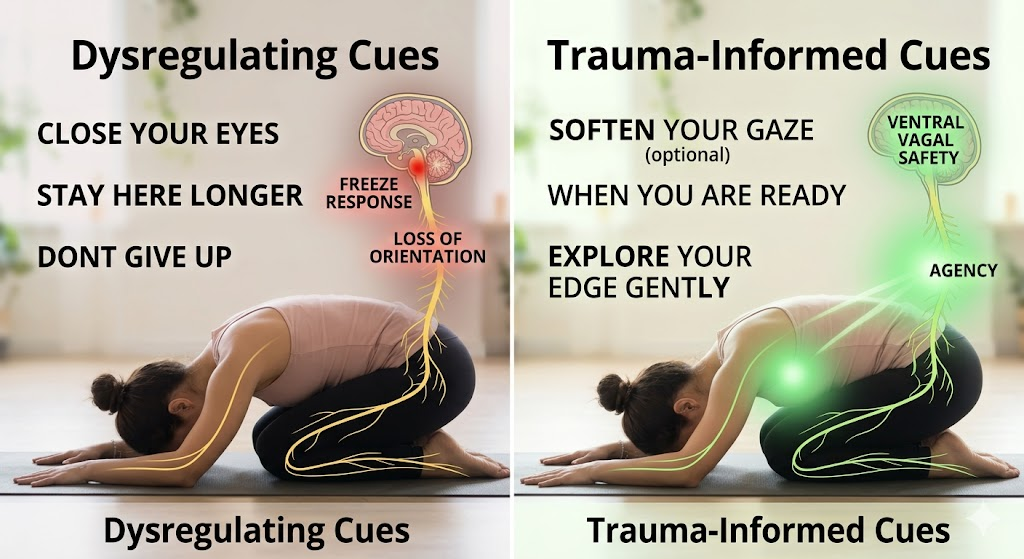
Why Traditional Yoga Cueing Can Sometimes Be Harmful
Yoga instructors were themselves trained in contexts where discipline, perfection, intensity, and obedience prevailed. Traditional training methods involved commanding statements like,
- Work harder.
- No pain, no gain.
- You’re supposed to feel this way.
- Relax.
- Close your eyes.
- Stay here longer.
- Don’t give up.
These might sound harmless; however, they have the potential to induce undue pressure and shame. A trauma-sensitive approach moves away from an authoritative teaching style to a collaborative one. The point isn’t to impose control on students’ physicality.
It is to encourage students to tune back into their inner awareness.
How Certain Words Affect the Nervous System
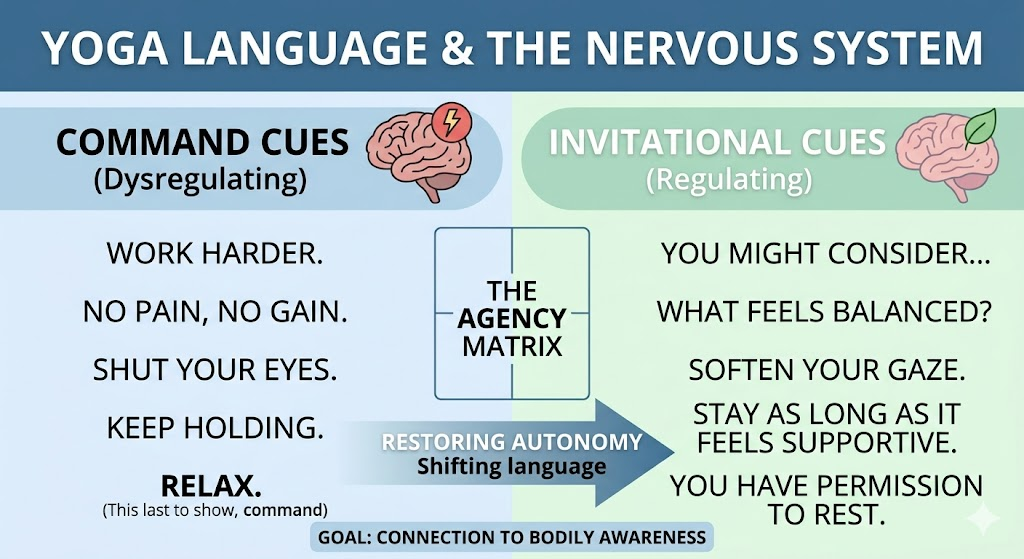
1. Command-Based Language Can Reduce Agency
Many trauma-informed clients have had experiences where their wishes and needs have been disregarded. Authoritative language tends to unintentionally replicate those experiences.
Potentially Dysregulating Cue:
Close your eyes and relax.
Why It May Feel Unsafe:
Losing sight takes away an essential source of orientation. Relaxing, as an order, may induce stress for individuals who feel unable to do so.
Trauma-Informed Alternative:
You can close your eyes or soften your gaze if it feels appropriate to you.
The alternative language restores agency to the client.
2. Intensity-Based Cues May Trigger Survival Responses
Some yoga teachers idealize going beyond boundaries. But for people who have experienced trauma, being in a heightened state is the norm.
Potentially Dysregulating Cue:
Go further in your stretches.
Why It May Feel Unsafe:
Pressure may be perceived as a threat by the nervous system. The student may ignore their body to impress the instructor.
Trauma-Informed Alternative:
What does support feel like in your body today?
This promotes exploration rather than compulsion.
3. Guilt-Based Motivation Results In Emotional Flooding
Language that creates feelings of shame or performance anxiety disconnects the students from their bodies.
Potentially Dysregulating Cue:
Don’t be lazy!
Why It May Feel Unsafe:
Shame activates defensive nervous-system responses and undermines trust.
Trauma-Informed Alternative:
Your body deserves rest whenever you feel like it.
This normalizes self-regulation and honors bodily wisdom.
4. Assumptive Language Can Alienate Students
Everyone processes sensation differently.
Potentially Dysregulating Cue:
This should feel great.
Why It May Feel Unsafe:
Pain, numbness, or discomfort could make a person feel inadequate or alone.
Trauma-Informed Alternative:
You might experience different sensations in this position.
This allows room for difference.
5. Urgent Commands Can Create Fight or Flight Reactions
Urgent commands may elicit stress reactions in students who are already experiencing anxiety.
Potentially Dysregulating Cue:
Make sure you get into the next position quickly!
Why It May Feel Unsafe:
Anxious responses will often lead to fight-or-flight activation.
Trauma-Informed Alternative:
When you are ready, feel free to shift.
Positive responses to pacing and autonomy.
The Core Principles of Trauma-Informed Yoga Cues Language
Below are the core principles of trauma-informed yoga language:
1. Offer Choice Instead of Demands
Choice promotes nervous system regulation.
- Instead of:
Do this.
Try:
- You might consider…
- If that feels appropriate…
- Another choice may be…
Choice-oriented language allows students to trust themselves.
2. Stimulate Curiosity Over Performance
Performance language motivates students to master postures instead of embodying them.
Instead of:
- Master your alignment.
Try:
- What feels balanced and sustainable?
- Curiosity fosters embodiment.
3. Practice Invitational Language
Invitational language alleviates stress and promotes agency.
Useful phrases include:
- You have permission to…
- Consider…
- Perhaps…
- You can experiment with…
The small difference in wording makes a huge impact on how students feel in class.
4. Normalize Rest
Many students find it hard to allow themselves a break.
Trauma-aware educators consciously emphasize rest as part of the practice rather than failure.
Examples:
- Rest is always accessible.
- A break can be part of your practice.
- Allow yourself to listen to your body in this space.
5. Don’t Use Triggering Metaphors
Some of the commonly used metaphors in yoga might unconsciously trigger past traumatic experiences.
Examples to use cautiously:
- Surrender.
- Fighting through.
- Killing the ego.
- Attacking the pose.
On the other hand, use empowering and supportive metaphors.
Examples include:
- Settle
- Explore
- Support
- Stabilize
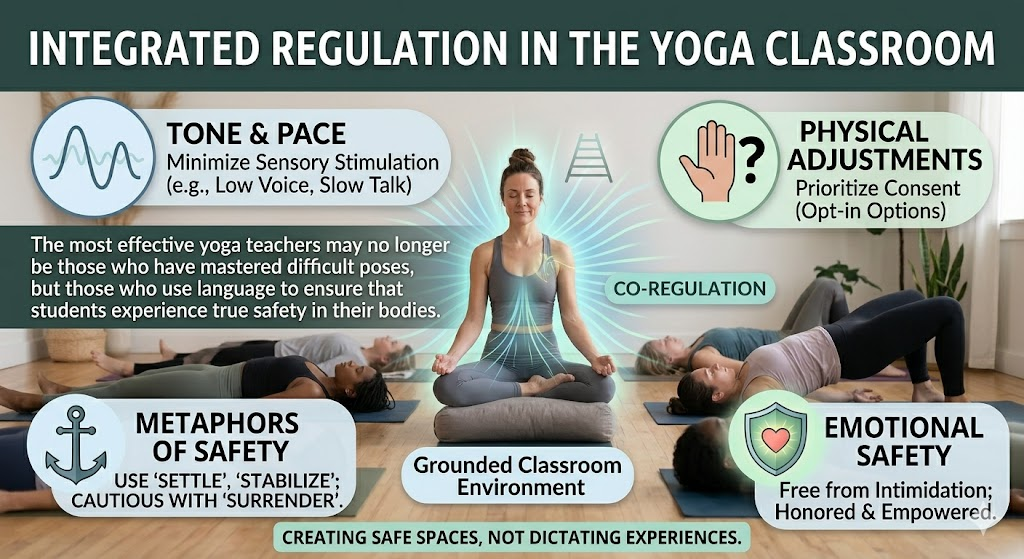
The Importance of Tone and Pace
A trauma-sensitive approach in teaching is more than just using the right words.
The nervous system reacts to:
- Tone
- Volume
- Pace
- Rhythm
- Silence
A fast pace or an intimidating tone may upset students even if the words being used are soothing.
Helpful strategies include:
- Talk slowly
- Allow pauses
- Don’t be overly critical
- Maintain a calm and consistent tone
- Minimize sensory stimulation
The teacher’s nervous system usually affects the classroom environment. A teacher who is grounded will promote a grounded classroom.
Physical Adjustments and Consent
Words around physical assistance have great significance.
In trauma-sensitive yoga, consent and bodily autonomy are paramount.
This means not assuming that touch is desired.
- Ask for permission.
- Allow opting in.
- Recognize when there is no verbalized agreement.
Key phrases to use include:
- Do you want any hands-on assistance?
- You are free to say ‘no’ at any time.
- I will show you first without touching.
Students must never be coerced into receiving touch.
Creating Emotional Safety in Yoga Classes
Emotional safety doesn’t equate with a lack of challenge.
Rather, emotional safety means feeling:
- Honored
- Recognized
- Empowered
- Free to make decisions
- Free from intimidation or coercion
A trauma-sensitive yoga class recognizes the individuality of each person’s nervous system.
As yoga instructors, we don’t have to turn into therapists. But knowledge of trauma-sensitive techniques creates safer yoga spaces.
Small Language Shifts That Make a Big Difference
Here are simple changes teachers can implement immediately:
| Instead Of | Try Saying |
| Push deeper. | Explore your edge gently. |
| Relax. | Notice what support feels like. |
| No pain, no gain. | Honor your body’s signals. |
| Everyone should… | You might choose… |
| Close your eyes. | If comfortable, soften your gaze. |
| Hold it longer. | Stay as long as it feels supportive. |
| Perfect alignment. | Find stability that works for you. |
Why Trauma-Informed Yoga Cues Matters More Than Ever
Life itself is now dysregulating.
Students may enter yoga with:
- Chronic stress
- Anxiety
- Burnout
- Emotional exhaustion
- Overloaded nervous systems
- Grief
- Traumatic backgrounds
Yoga spaces may serve to perpetuate pressure and separation or to facilitate healing and empowerment.
Trauma-sensitive vocabulary assists students in:
- Reconnecting with their physical awareness
- Building trust within themselves
- Regulating their own stress response
- Feeling more emotionally safe
- Practicing without fear of criticism
- This is not about achieving perfection.
- This is about being present, sensitive, and communicative.
Conclusion on Trauma Informed Yoga Cues
Words influence experience.
In a yoga class, language can serve as a tool for supporting nervous system regulation, or it can unwittingly add to stress and alienation. The practice of trauma-informed cues asks teachers to relinquish control, performance, and pressure and embrace choice, curiosity, and compassion.
A slight shift in language can transform a student’s entire experience of their body, breath, and emotional safety.
Rather than dictating, teachers can invite.
Despite of demanding, they can offer encouragement.
Rather than presuming, they can provide room for personal experience.
Ultimately, trauma-informed yoga celebrates the complex nature of humans by acknowledging that recovery is not accomplished by imposition, but by creating a sense of safety, autonomy, and connection.
As yoga keeps developing, the most effective yoga teachers may no longer be those who have mastered difficult poses, but those who use language to ensure that students experience true safety in their bodies.
FAQs on Trauma Informed Yoga Cues
1. What is trauma-informed yoga?
Trauma-informed yoga is a type of practice that focuses on emotional safety, consent, choice, and nervous system awareness. Certain students carry traumas or stress responses that make it difficult for them to participate in yoga.
2. Why can yoga instructions be triggering?
Particular words, voices, and instructions could unintentionally bring back memories associated with feeling pressured or afraid. Language acts as a signal for the body to determine whether it needs to protect itself or not.
3. Do teachers require certification to offer trauma-informed yoga classes?
A certificate is useful but not necessarily required. It is possible to begin teaching yoga from a trauma-sensitive perspective, starting from respectful, consensual, and choice-based language.
4. What is invitational language in yoga?
An invitation gives options rather than making instructions. For example, the phrase, you might consider doing gives people the possibility to choose for themselves.
5. Is trauma-informed yoga not challenging?
Not at all. The idea behind trauma-informed yoga is not to take the challenge away; it is just to ensure that challenges are offered respectfully.